Sunday, March 29, 2009

The BIOTE Diaries: Beating the Bookstore


You know it's the start of a new semester at the University of Texas at Austin when you hear a certain clamour on Guadalupe St., known locally as The Drag. Students throng the stores on the Drag near campus, hastily stocking up for the new term, which means having to buy a whole new set of books. Make no mistake, books are expensive here, and that goes double for textbooks. Naturally, a bunch of places have sprung up where you can get your stuff secondhand or at a reasonable discount, among them a place called Beat the Bookstore. But "Beat the Bookstore" is no longer just the name of a store, it is now an unofficial motto of UT students, a philosophy. And this philosophy has trickled down to the issue of shopping at general bookstores, the ones which cater to the needs of Literature and History majors (among others), and book-browsers like me. But the situation only became clear to me during my final week as a resident of Austin, Texas. It felt like the end of an era in more ways than one.

On a Tuesday that week, around the same time I came to hear of Premier Bookshop's impending closure - and I like to believe this was more than mere coincidence - I was walking down the Drag when I saw the sign, a sign that the economic crisis was having its effect right in front of my eyes; the University had decided its main bookstore was dispensable, and would be closing it down soon. I stood in front of Intellectual Property, the place where I had spent many a leisurely hour over the past couple of years, and slowly read the announcement that they were discounting their entire stock by a sizable amount, before closing for good in a month's time. I duly rushed in to pick up one last title from there. On the Road (Jack Kerouac), which had in fact been recommended to me years ago, was unavailable, so I settled for Crash by J.G Ballard, at a reasonable 40 percent off.

To those Bangaloreans who swear by smaller places like Premier, Blossom, Bookworm and their ilk, the picture of IP above probably suggests that it was just another big corporate establishment with all the trappings, but devoid of any soul. The reality was way different; compared to glitzy monstrosities such as Borders or Barnes and Noble, IP was positively quaint. It combined the proprietary helpfulness of Premier with the immaculate arrangement of Sankar's, and the interiors were simple yet inviting. If you look closely at the pic, you'll notice a narrow long blackboard above the shelves running the length of the walls; this was typically decorated with quotations from literary figures, inscribed in chalk. Best of all, it was a peaceful place staffed by ever-smiling book enthusiasts who didn't mind if you hung around and flipped pages indefinitely. They had an excellent catalog, and although their books were first-hand and therefore priced accordingly, discounts were common. They featured a neat bestsellers' section which was regularly discounted by 30 percent; it got me acquainted with a range of titles which often left me bookshelf-dreaming, if nothing else.

Why did they close down? After all, every big University needs a decent bookstore, and this was located in a prime area teeming with potential clients. A friend of mine came up with an interesting theory, one which Malcolm Gladwell might have approved of. He observed that, with the door being perpetually open and the windows wide and big, thus allowing the sunlight to come in, as a casual browser or potential customer you had a constant view of the crowded outside world; you were thus compelled to leave sooner than you normally would. The interior of a bookstore should be designed to keep the customer's attention focused solely on the books, and that means paying more attention to little visual details. The same open-view-of-the-street was true of Premier as well, but that place had a fiercely loyal clientele which kept it on life support for about two years after the end of the road had been reached; perhaps IP's customer base was more fickle. As I made my final purchase, I had a quick chat with Dara, one of the staff whom I'd come to know over my regular visits to the store. She had some interesting insights to offer on the predicament of the friendly neighbourhood bookstore:

"You see, bookstores like ours operate on very small margins. We compete with the bigger chains as well as the downright secondhand places, and in our case we even had to supplement the income generated from books by including a Computer Products section. In hindsight that was a bad idea, because you already have a computer store on campus which fulfills the needs of the very customers we were hoping to attract. Perhaps we could have worked on the interiors and the arrangement a little, like having a properly organised History section to target specific UT majors. Our location also worked against us, there's no parking for miles in this crowded campus area. Of course college kids mostly don't read as much as they used to...that was pretty evident from the declining number of sit-in-readers we had over the last year. But I would say the biggest threat to our business is the emergence of the online bookstore. Now that people are getting everything they need cheap at Amazon, why would they bother with a place like this?"

There was a sense of calm acceptance in her voice, which betrayed only the slightest hint of regret, much like the matter-of-factness displayed by owner Shanbag upon his decision to close Premier. When I read this article on IP's closure, I found the last couple of lines (which talk about the opportunity to cash in on the closing discounts offered) particularly interesting:

Just because you couldn't be bothered to support a local bookstore while it was struggling to stay afloat in one of the riskiest pieces of real estate in the city doesn't mean you can't capitalize on its demise. That there is the American way.


More power to the American way, then. Nevertheless, I was happy to be around at the end, for it was consolation for not being able to make one last trip to Premier.

PS: Premier's closing had me going all nostalgic as well; I even commented on the resilience of the store in an earlier post. I'm too tired to write a piece on it here, but I do recommend Ramachandra Guha's tribute in The Hindu.

Current Music: Cut Copy - Hearts on Fire

Tuesday, March 17, 2009

On Watching the Watchmen


If you're wondering what the deal is with this new superhero movie, and intend on approaching it with caution, my two bits would be: read the book first. Hell, read the book anyway, whether or not you care about the film. Now I'm not trying to play the snob who's out to praise the book to the skies and trash the movie adaptation; I read the comic series a few months ago and thoroughly enjoyed it, but that alone does not make me a comic book connoisseur. (Disclaimer: I sure as hell don't spend my free time playing dungeons-and-dragons. I spend it writing blog posts.) If you've already read the book and liked it, you probably *have* to watch the film for no other reason, just like me.

[For a quick plot summary, read the wikipedia entry].

Watchmen, being commonly seen to represent the "kingship" of the Graphic Novel genre (which is probably justified), was ever a likely candidate to be turned into a film, sooner or later. The fact that it was mentioned in Time Magazine's 100 greatest novels list has only added to the legend. Porting it to the cinematic medium was always going to be a tall order, for it is a veritable African elephant, simply too big a beast to be tamed. While the film does eventually collapse under its own weight, the director Zack Snyder deserves an A+ for his ballsy effort to realise the impossible and keep it propped up. He was faced with two equally ominous options - playing it safe and keeping the fanboys happy by remaining as faithful as possible to Alan Moore's work, or doing a variation on the theme and risk being critically panned. He chose the former, and unfortunately the characters are "bottled up within that frame" as another viewer told me.

The movie clocks in at 165 minutes, and can be tedious to sit through. Like The Matrix, it is possible to get the gist of the plot and be spellbound by the concept if you concentrate hard. If you're expecting an evening of mindless entertainment, be warned; this movie is relatively low on action, and its depth of content it makes The Dark Knight seem like a pleasant little stroll of a tragi-comedy. Synder has really taken it upon himself to put the "Graphic" in this Graphic Novel adaptation; whenever violence surfaces, it often takes the meticulously detailed and brutal form that was apparently a defining feature of 300, but it doesn't seem to work well here. There's also a particularly violent rape scene as well, which was a little hard to stomach.

The best feature of the film, without a doubt, is the portrayal of Rorschach. Jackie Earle Haley does a splendid job of bringing out the vengeful hostility and vulnerability behind the mask of the story's most fascinating character. It's just a pity the movie had already run too long to delve deeper into the details of Rorschach's past. (Incidentally, The Tales of the Black Freighter, which serves as the fictional comic-within-the-comic in the book, was also left out, but will be released separately on DVD, detailing the characters' backstories. Now there's a neat marketing idea.) Also worth talking about is Malin Ackerman's solid performance as Laurie Jupiter a.k.a Silk Spectre II, despite her part in a most ridiculous scene which I've mentioned below. The rest of the cast, particularly Billy Crudup as Dr.Manhattan are less inspiring.

One of the most noticeable aspects of the film is the deliberate injection of accompanying music at various points, an almost blatant admission that its target audience likely consists of neurotic record collectors (yup, guilty as charged!). This can be extremely hit-or-miss; it works in the opening scene, as images from the past are played to Bob Dylan's The Times They are a-Changin', showing that Snyder wasn't too preoccupied with the original to add a few distinctive touches of his own. But Sounds of Silence at the Comedian's funeral and All Along the Watchtower while Rorschach and Nite Owl crash into Antarctica are way out of place. And oh yeah, there's Leonard Cohen's Hallelujah serving as the bizarre background to an ultra-passionate love scene between Laurie and Dan. What's up with that? Unfortunately, what could have been one of the movie's more surreal moments is completely spoiled by the activation of a flamethrower to signify Laurie's orgasm. Downright tasteless and stupid. I don't think I'll ever be able to listen to Hallelujah with the same ear again!

Alan Moore, who distanced himself from the film adaptation, had this to say about his work: "It's a comic book, not a movie. It's been made in a certain way, and designed to be read a certain way: in an armchair, nice and cozy next to a fire, with a steaming cup of coffee." Looking back, that is precisely the reason I enjoyed the book so much. Instead of having to take it all in at one shot, I was able to enjoy it piecemeal, reading one volume of the series at a time. Having sat through this monster of a film, I was, well...filled up, but definitely not satiated.

Current Music: Christy & Emily - Superstition

Monday, March 9, 2009

The Slacker

To be sung to the tune of The Seeker by The Who (see link at the end for the original). This didn't come out as well as my previous attempt at a spoof, but it's a bit more autobiographical.

[Dedicated to anyone who has happily acquired the jobless, wothla, vetti, or vella tag]

I've slept through my past,
Don't bleed for my future,
I just live for this moment,
But they all think I'm a loser

Chorus:
They call me The Slacker,
I've been drifting low and high
I won't care a hoot what I'm after,
Till the day I die.

I asked Richie Linklater,
I asked my teachers
I asked Dude Lebowski,
But he couldn't help me either

[Repeat Chorus]

People tend to bug me,
'Cause I got no plans
As they ransack my dreams they make me wanna scream,
Focusing on my space,
Need my peace of mind
I'm a Slacker, I'm a really clueless man.

I won't care a hoot what I'm after,
Till the day I die.

I learned how to curb my useless anger,
Yeah, but look at my face, see me fake a smile
I'm happy when life's good, and when it's bad I'm mine
I've got an MS Degree, but I don't know how or why!

They're looking for me,
They think I'm confused
I try hard to tell them,
But they keep telling me what to do!

[Repeat chorus]

Current Music: The Who - The Seeker

Saturday, February 28, 2009

The BIOTE Diaries: Chilli Chicken in a One Horse Town

It's been just over a couple of weeks in my latest posting at Sacramento, CA. The moving in and adjustment to the new work routine have happened so fast that I've scarcely had the time to drink it all in, but I have formed a couple of initial impressions to put down all the same.

First up, the much vaunted California weather appears to be one big myth. This place is pretty enough, if not strikingly so, but with all the rain, cold and gloom I've hardly had a chance to step outside and look around when done for the day. Anyone stuck on the east coast or the midwest would probably argue that this place is heaven by comparison, but having been told that things are more costly in CA because you're "paying for the weather" it feels a bit of a let down. I have much to take in so I hope things will improve.

As for the area I live in, it's culturally dead. The apartment is fine, but the surroundings give me the distinct feeling of how things would be if I lived in Electronics city, or Sarjapur (Bangalore readers will relate to this) - nothing but office buildings and lawns, big empty streets with intermittent zooming traffic, and a few convenience stores here and there. No bookshops, no music stores, no cafes which stay open late, and no movie theaters (where will I catch the opening of Watchmen in a week's time?). It's just as well I have to spend twelve hours a day in the office, I'd have a hard time figuring out what to do here otherwise. I had a lot I took for granted back at the University, and though things are too rushed for me to pine for the comforts of my previous location, the thought of being stuck in this halli for the next few months makes me want to make a trip to Austin sooner than I'd planned. Or at any rate, get my license done, rent a car and make a trip somewhere.

I recall the frantic packing I went through in Austin, neurotically assembling my collection of books and audio cassettes together (even making a list of the ones I left with my friends back there), trying to stuff the last two years of my life in a couple of suitcases. Maybe I should be concerned about my continued obsession with my cassette collection and borrowed books, things I should have outgrown by now. But much as I like to think that almost everything is dispensable, it turns out that these kinds of tangibles - stuff you've put a lot of effort into acquiring - eventually breed a sort of possessiveness that's terminal. Too many happy memories, I guess.

The apartment's nice and big. I'm rooming with four others, and while we've got along so far I'm reserving my judgment. New roommates always provide an interesting study in observation, as well as apprehension. It probably stems from what Tim May describes very well in his book, Mayhem:

I think that the practice of putting two fully developed males, friends or not, in a room together for several months is a fraction unnatural. Your most intimate conversations with loved ones, your private habits, private noises, private scratches are all shared with someone who is sleeping six inches away.


He might have added the part about disagreements arising from the way plates are dumped in the sink, the bits of hair spread across the shower, and the way the wastebin overflows onto the nearby carpet. Rooming with someone of unknown habits can either force you to re-evaluate your sense of aesthetics, or make you realise you're not the cleanliness freak you imagined yourself to be. The next few weeks will be pretty revealing.

One of my roomies made a weekend trip to San Jose to attend a family event. He returned with several dabbas of ultra-fiery food, leftovers from the function. Among the takeaways was some chilli chicken which proved to be the ultimate tearjerker, and has since shaken my world in general and my digestive system in particular. It reminded me, in the most masochistic way, of the last time I had eaten something this spicy; back in July 2005, I accompanied Shom and another friend to RRR, the Andhra restaurant in Bangalore. We were daft enough to go along with the waiter's recommendation, a chicken dish which was spicy on the outside - no surprise there - but proved to be dynamite on the inside; it was liberally stuffed with chilli seeds. The subsequent assault on my taste-buds was like nothing I had ever felt before, or three years after; who would've thought I'd be compelled to revisit that memory in my current situation? Not quite deja vu, but strange all the same. And thus I shall conclude this entry with a piece of advice to all epicureans back home: never trust a waiter at an Andhra restaurant.

PS: Although not originally intended, the title of this post could be thought of as a tribute to a certain book by Pankaj Mishra. Highly recommended for an insight into small town India.

Current Music: Al Pitrelli - Birdland

Saturday, February 21, 2009

The B.I.O.T.E Diaries: Going to California

The recent past has seen a fair amount of change. Well, it all just had to be so. December was the time I would earn my degree, and all my thoughts would need to be directed more at the short-term (what is my next move, and what do I plan to do with my life?) and less at the immediate term (who am I going to stooge a dinner off tonight?). After a billion job applications, ideas about ditching this US business, and thoughts about staying in school, I've moved to California to start a job of some sort. It's not what I would ideally like to be doing, but such is the state of the economy that finding employment anywhere is as about as easy as locating a creek in the Kalahari, and certainly as essential for a graduating student.

There was minor heartbreak along the way. In the midst of these trying times I actually managed to secure a job in Bangalore; but it wasn't just any job, it was a dream job, a job far removed from whatever I'd done academically till now, unexpected and out of the blue. For a variety of reasons, mostly dictated by monetary concerns and cold logic, I ended up turning it down. As for how I felt about the whole deal, it was something like this; imagine the girl of your dreams, the special someone you let slip by an age ago, is suddenly back in your life. You're stuck in a listless marriage and would love a clean break. But something is holding you back, and you're unable to take the brave decision and execute it whole-heartedly. And so, you let go.

The consolation here is, career choices are not as complicated as relationships, so I'm carrying on in the hope that the dream might yet be realised somewhere down the line. For the time being, I continue to rack my brains and try to find out the best use of my Master's Degree. In a sense, the Indian IT and Tech sector fallout as a result of the recession almost seems like a good thing, when I think of people like myself back home. It might encourage those kinds, the ones with some creative instincts but no particular academic fixations, to look at other avenues instead of putting all their cerebral eggs into the Technical basket. Then again maybe not, 2001 happened and very few at the time seemed inclined to skip the beaten track. But again, the bucking has to start somewhere right? Maybe when I have enough money..

Another good thing about the recession is that it's given everyone out here a common topic for discussion. You can sympathise with someone who's lost his job, empathise with someone who's looking for one, laugh collectively when someone quotes the latest economy-joke, and relate depressing tales of layoffs and paycuts when you're surrounded by boring company and don't have a stiff drink to come to your rescue. The economy has been pretty hard on students, too. I was on the threshold of continuing my stay in Austin as a PhD student, and when I bid adieu I also handed over a coveted Teaching Assistant position to a friend, which for him was solid gold; and there were hundreds of others waiting to pounce on the same. It's become near-impossible to find work on campus of late.

But that was Austin. I wonder what lies ahead in this new place. Apart from Arnold Schwarenegger and the Kings, Sacramento doesn't seem to be an especially renowned city. My next few entries will feature ramblings from the Californian capital, and my experiences adapting to this new environment.

In case you're wondering about the acronym in the title, that's Blame It On The Economy.

Current Music: Delhi 6 - Arziyan

Saturday, February 14, 2009

A Letter to the Chief Minister

Dear Sir,

With regard to the recent pub attack in Mangalore, I was glad to hear your willingness to take up the case against the Ram Sena in the state cabinet. Your statement that people taking the law into their own hands will be dealt with firmly is also good to hear, though it would be more reassuring if you dealt with the potential troublemakers well before their hands get to work. However, your declaration that you "will not allow pub culture to grow in Karnataka" leaves me concerned.

Whether it is our congested yet still beautiful capital city, or up-and-coming places like Mangalore, I suppose you feel that much needs to be done to guard against such incidents happening in the future. But is clamping down on pub culture the solution? Yes, the inconvenience caused to urban pub-goers like me, by having our friendly neighbourhood watering hole closed, is minuscule compared with the problems which less privileged people have to deal with. Quite a few elders in the family would agree that more good can come out of staying away from pubs than bad. Apparently, it is a trivial issue which we should take in our stride. But have you considered that denying us a basic freedom could be counterproductive? I probably don't have to remind you of 1993, when Shri Veerappa Moily imposed a ban on liquor sale in the afternoon with a view to keeping schoolkids away from pubs; it only started them off earlier. Would you really rather have the whole lot of us knocking back bottles only at home? There would be a fair amount of cultural disrespect involved, I can tell you!

We are also presented with the angle that pubs have been deemed unsafe for women, and therefore in the name of personal safety it makes sense for us 'youngsters' - girls in particular - to keep away from them. If most of the women I know take this as an affront, as they should, they certainly don't need me to speak on their behalf. However, I speak for the average pub-going Indian male when I say it is an insult, a slap on the face of our standing as good citizens. Most of us waited till we were 21 to enjoy our first drink; and enjoy it (sensibly) we did. We spend many a memorable Friday evening after a hard day's work, unwinding over a pitcher of beer and good company. Perhaps urban India is lacking in alternate recreation when it comes to deciding where to meet up with a bunch of friends on a weekend; but the fact remains, the occasional drink at a favourite pub has become part of the fabric of our professional and social lives. Maybe not something we would choose to define ourselves by, but something as essential as a Sunday lunch at home or the odd familial visit to the movies. And yet, we have organisations all around insinuating that the only reason we might go to a pub is to drink ourselves silly and misbehave with women. Is that the solution then, compromising a lifestyle choice of a sizable number because a sexually repressed few continue to find a convenient outlet for their frustrations?

Having been away in America for the last two years, it is possible that the exposure to this consumerist and (supposedly) more liberal society might cause me to look at things in my homeland in a less pragmatic light; what works here does not necessarily work in India, and the last thing anyone wants is another NRI telling them exactly what is wrong with the state of things back home. But consider the city I lived in for nearly two decades, Bangalore (I refuse to call it by its changed name). It boasts no notable sites to attract the discerning tourist, and the only conceivable reason a holidaymaker might stop by is to make a connecting trip. Yet, in the past, tourists were mostly enamoured by this progressive city and the welcoming nature of its inhabitants. This naturally translated into an enlightened attitude towards alcohol, hence the growth of the pub culture you now want to stamp out. Although you may not be willing to admit it, the pub scene has had a mostly positive impact on the way Bangalore is perceived, a small but vital contributory factor in appealing to the techie and tourist alike. Compare this with Chennai, a fine city in its own right, but a place which remains incredibly insecure when it comes to matters of the bottle. This is what a friend of my father had to say about the issue there:

In Chennai, going to buy liquor from the government controlled TASMAC shops is an utterly anti-civilisational, self-demeaning act. The atmosphere around these shops is filthy beyond description. You have to gingerly maneuver your steps between dollops of spit and phlegm, remains of old and fresh vomit, broken bottles, remains of the plastic pouches in which vendors sell kadalai (boiled gram) and pickles, puddles of piss in the corners, drunks lying sprawled in the muck and a general air of depravity and squalor which beggars imagination.

I don't know about you, but that description strikes me as a pointer to how things might be if pub culture were indeed wiped out. By and large, the public recognises that social drinking is a behavioural norm, not a recipe for breaking a household. Why would you want to change that perception?

We keep going on about how India is a developing country, and how we find the term disparaging. I think everyone would do well to remember that development is measured not only in material terms or standard of living, but also in the evolving of our attitudes and sensibilities over changing times.

Yours faithfully,
SC

Current Music: Duran Duran - Save a Prayer

Wednesday, January 28, 2009

American Dappankoothu


On what was my last Saturday night in Austin, Bulla and me roamed 6th as usual, looking for a place where we could sup our beers and enjoy some decent live music. We landed at a joint whose name I forget, but the look and clientele were distinctly extreme metal. We headed out to the backyard, where the 'funeral concert' for local alcoholic energy drink Sparks was taking place. With a crowd of around twenty, the next twenty-or-so minutes were taken up by some wasted idiots on the mike, mostly relating incredible tales of how "Sparks changed my life". Then the bands came on, and the whole place turned into a mosh pit.

Whilst the guys on stage were churning out loud jackhammer-like riffs, the lead vocalist/growler whipped off the cordless mike and pranced off the stage onto the floor as if to be one with the audience, seemingly in the act of inciting a riot. And it worked, for a joyous moshing session followed. It was like playing bumper cars minus the cars, or a form of dodgeball where each participant doubles up as a ball. Somewhere in the middle of this blokes-only barroom brawl, the odd girl would crash in for her piece of the action. "This must be a form of American Dappankuthu!" remarked Bulla.

I decided to test Bulla's observation. Is there a connection between Death Metal and Dappankuthu at a fundamental level? These were the points of comparison I was able to come up with:

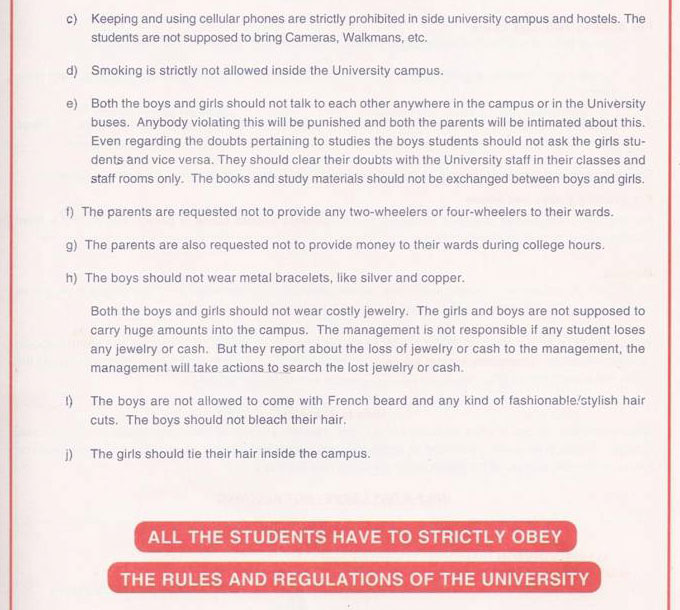
1. The bretherhood factor: Really, if beer has helped ugly people have sex since 100 BC, then Dappankuthu/Death Metal has given them a reason to live. Consider your average Tam stud; having survived 12-odd gruelling years of the oppressive boys-only senior matriculation environment, his hopes of having a life are dashed when he makes it to engineering college, courtesy boy-girl interaction rules like these. Having fallen into that abyss called social ineptness, he is finally rescued by that great unifying asylum for the hormonally repressed, Dappankuthu. As for his American counterpart, I'm willing to bet my metal tape collection that if society hadn't given up on him he'd be spending rather more time in the club than on practicing his air guitar. You see, it all boils down to a sense of belonging. Of course, the token female may decide to gatecrash and occasionally steal the show (like the one in Naaka Mukka, or the girl in the pub whom I had a crush on for exactly thirty seconds), but this is all essentially Fight Club on earth, just like Palahniuk envisioned it.

2. The revenge of the drummers factor: Most musical genres are rather one-sided. In Carnatic classical for instance, the vocalist holds center-stage for most part, with the others having decidedly supporting actor roles. In arena-rock, the loud cheers are reserved for that pansy guitarist who uses his 'instrument' as an excuse for..well, you know. But finally, the much maligned, butt-of-all-jokes drummer gets his due. A metal band is almost overdependent on breakneck percussion. And a street-procession dance is nothing without the tighter-than-hell beats of little drummer boy.


3. The wedding factor:
Having become the mainstay of the Kollywood music industry, kuthu songs are enjoying a renaissance of sorts at wedding halls. Step aside Kajra Re, gotta have some Appadi podu instead. And if Cock and Ball Torture is the last band you'd want playing at your wedding, maybe you should have a look at this before you plan the festivities.

4. The surprise factor: On the evolutionary scale, these two musical styles are mostly rated as figuring just above rock - the kind flung around by cavemen to create sounds, that is. Nothing could be further from the truth - if the experts are to be believed, they transcend the average idiot's capability of aural appreciation. But even a below-average idiot would find it hard to resist the leadoff guitar in this In Flames song, or indeed the opening riff of Chikubuku Raile. The latter has further asserted itself in MIDI format as one of the more common ringtones to annoy your co-workers with in office.

5. The convenience factor: The lure of Tamil gaana songs was aptly summed up by a kuthu-ophile on campus, "You can just do whatever you want without worrying what someone will think when they watch you 'dance'". When similarly asked for comment, the metalhead offered a more simplistic description: "Fuck You!". As opposed to a round of clubbing, for which preparation involves everything from selecting the right styling gel to painful self-assessment of dancing skills, a nightout with the mob is remarkably stress-free. And if you really want to dress the part, simply don that lungi or smelly black t-shirt and you're good to go. Tattoos and body-paint are welcome additions.

6. The questionable content factor: By design, the lyrics are supposed to ruffle a few feathers - the whole exercise would be pointless otherwise right? While the metal crowds fuel themselves by continually being at odds with everyone from God to the First Lady, their South Indian brethren revel in their own notoriety by disregarding prudishness completely. From an outsider's point of view, paying extra attention to the lyrics can be an immensely trippy and rewarding experience. Just don't expect any inputs from the insiders themselves - with a view to preserving their cult status, they've been ordered to give the impression that they take themselves as seriously as possible.

Besides reaffirming that I have too much time on my hands (and increasingly appalling taste in music), this whole exercise has given my future some shape. These days, I spend a lot of time wondering just what to do with my Acoustics Engineering degree. I have now resolved to get some experience mixing sound in a recording studio, and shall then promptly head off to Ulsoor Road where a latent appreciation for all things gaana and metal exists, if the growling and beating you hear during processions is any indication. With the right resources, we will produce a fusion album - and it will be called American Dappankuthu.