I finally watched Kahaani a couple of weekends back. Tickets had been near-impossible to get, and we were on the verge of choosing between Agent Vinod and The Hunger Games before vacancies were found in INOX some twenty minutes before the start. The movie came highly recommended from various people, so expectations were high.
And, for the most part, it delivered. There wasn't a single wasted minute in the plot, which is an achievement for a movie that clocks in more than two hours. I liked the characters as well. Vidya Balan's Ms. Bagchi is a worthy addition to an impressive body of work. The contrast between the Kolkata cop Satyaki and the fiery Intelligence Bureau Deputy Khan was neatly drawn out. Saswata Chatterjee's character, the contract killer Bob Biswas, was low on screen-time but high on impact. Satisfying is the word which comes to mind when I look back at this viewing.
Thinking about the film, the thing that interests me is that despite having been made on a low budget, it "carried" itself like a mainstream movie. It wasn't marketed as a Multiplex movie; and it wasn't self-consciously offbeat (if that makes sense). It didn't give off the vibe Johnny Gaddaar (another film which wasn't punctuated with songs) did, and it certainly didn't aspire to be an Anurag "How about I give you the finger" Kashyap-type creation. No, this was a resolutely Bollywood film, if not a conventional one.
Kahaani isn't a masterpiece. It's possible that much of its appeal simply lies in that fact that it's a bit different. If you look hard enough you should be able to pick out its flaws (as Jai Arjun and some of the comments in his post have done), and I suspect it won't appear quite so good on a repeat viewing. But it does reach a certain standard; this is the sort of movie I'd like to see our filmmakers putting out as regular fare.
I'm not really the Bollywood type; my tolerance for Hindi film excess isn't great. I am more likely to take a chance on an English movie than a Hindi one, and hence routinely end up watching average Hollywood productions while missing out on good desi stuff. Still, a good Hindi - or Tamil, or any other Indian-language - film holds more value for me than an English one, possibly because you're more likely to identify with a setting closer to your own experience (and also because, at some level, bias is inescapable). This is similar to how I feel about Indian fiction, even if our output in this sphere could be way better.
So, having encountered a lot of sources eager to point out that a movie just cannot succeed without including the necessary masala, it was nice to see a reasonably intelligent film engaging with the audience mostly on its own terms, and landing on its feet.
This is not to argue against big-budget, song-and-dance films; they are part of Bollywood's charm. Kahaani, however, is a reminder that there's room for other stuff too in the mainstream.
Thursday, April 5, 2012

Wednesday, September 15, 2010
Discovering British Television
The Hat-tip: When you feel like reviving a blog but have absolutely no material in mind, what do you do but borrow ideas from others' posts. Just as Swaroop's article on Rahman albums inspired a follow up on this blog, Soumithri's post on television has given me the incentive to write about my viewing experiences with British Television Shows.
The entry point for me dates back to 2007, while I was over at Ghanashyam Anna's place during my internship in Hyderabad. With not much else to do, I watched his DVDs of The Thin Blue Line and Only Fools and Horses, acquisitions from his days in the UK. TTBL, starring Rowan Atkinson, is a sitcom about the goings-on in a Police Station with some particularly hilarious banter between the officers and the CID detectives, while 'Only Fools..' takes us through the misadventures of two con-men, the Trotter brothers. I'm not really sure what drew me in, but it was refreshing to see Atkinson play someone other than Mr.Bean (he is ten times the actor when he actually opens his mouth), and the simple but well-executed plots in 'Only Fools..' had me hooked.
My curiosity aroused, I went back to other old shows I had paid little attention to when they had earlier been broadcast on STAR - Yes, Minister and Blackadder - and then started searching for something more contemporary. High-speed internet in the US turned out to be a godsend. Why British TV, you may ask? It belongs, as Soumithri says, in its own separate slot of awesomeness. It makes for viewing that is fundamentally different, if that's what one is looking for. I'm not going to suggest that it is better or worse than American Television; but since most couch potatoes around me agree that American shows (since they dominate the airwaves here) form the accepted 'template' for English-language programming, I shall use American TV as a basis for comparison.
To explain further, I give you one of my analogies: British TV is to its American counterpart what Tamil Cinema is to Bollywood. Many people who watch films in both Hindi and Tamil feel that, while Tamil Cinema lacks the glitz and polish of Bollywood and has a more low-budget feel, there is a grit factor and down-to-earthness about it which makes it more compelling at times. Its characters tend to be more everyman (or everywoman) than glossed-up. The experience of watching the US remake of The Office soon after seeing the original was a bit like watching Saathiya after Alaipayuthey. The US adaptation is a fine show in its own right but, when compared to the poignant, farcical world of the UK version with its quietly desperate inhabitants, seems a little watered-down; I know which one hits me harder.
There's also an 'out of the box' element to these shows which keeps me interested. They don't enjoy the sort of financial backing from networks which their American counterparts have, resulting in much smaller teams of producers and writers (and about 6 shows on average per series); but a relative lack of resources is often made up for with innovation. The Crystal Maze, which many of us who grew up in the 90s fondly remember, ran on a shoestring yet was a wholly enjoyable game show, especially with Richard O'Brien at the helm. In Q.I, which Soumithri also wrote about, Stephen Fry and the contestants elevate the world of quizzing and trivia to something, well, quite interesting. And there's the irreverent sitcom Coupling, which took the FRIENDS formula and turned it on its head.
The humour in Brit-coms can be fairly unsanitised. Sometimes this means they go to lengths which American shows won't, and sometimes it simply means the characters get to say "fuck" a lot. The Inbetweeners is an American Pie-esque adolescent comedy with a mean streak and rougher edges, and is quite watchable although it covers no new ground. British drama, on the other hand, can be refreshingly understated. Judge John Deed, whose reruns are being shown on the BBC Entertainment Channel here, is an intense courtroom show without the unnecessary trappings of Boston Legal, for example.
Of late, I've been a sucker for shows which try to incorporate realism through the single camera setup and by focusing on the mundane. The Office is the most obvious example. There's also the downbeat Outnumbered, which portrays the chaos in the lives of a couple having to deal with their three pesky, oversmart kids; it's funny in a low-key sort of way. My personal favourite is Peep Show, which I wrote about earlier. David Mitchell and Robert Webb make a brilliant comedic duo, and this is the show for those of us who tend to find ourselves thinking a bit too much. When I first saw it, I wanted to go to the nearest rooftop and shout about it to everyone I knew. These days, I look at it as a highly potent recreational drug, to be taken on occasion. Try it and let me know what you think.
It's not all solid gold though, and I've discovered a fair number of duds along the way. I'm often disappointed by the geek sitcom The IT Crowd; great concept, but poorly executed. Not Going Out, of which I caught a few episodes on BBC Entertainment, is heavy on bad puns and little else.
Of course, there are many sides to British Television I haven't explored - those panel shows which Soumithri mentioned, a number of interesting sounding sci-fi programmes, and sketch shows. And there are serials which tap into the country's deep reservoir of myths, legends and culture such as Merlin, Robin Hood, Jeeves and Wooster. The one I'm really looking forward to watching is the recent mini-series Sherlock, though I hope the positive reviews haven't set my expectations too high.
I've said enough. What have you been watching?
The entry point for me dates back to 2007, while I was over at Ghanashyam Anna's place during my internship in Hyderabad. With not much else to do, I watched his DVDs of The Thin Blue Line and Only Fools and Horses, acquisitions from his days in the UK. TTBL, starring Rowan Atkinson, is a sitcom about the goings-on in a Police Station with some particularly hilarious banter between the officers and the CID detectives, while 'Only Fools..' takes us through the misadventures of two con-men, the Trotter brothers. I'm not really sure what drew me in, but it was refreshing to see Atkinson play someone other than Mr.Bean (he is ten times the actor when he actually opens his mouth), and the simple but well-executed plots in 'Only Fools..' had me hooked.
My curiosity aroused, I went back to other old shows I had paid little attention to when they had earlier been broadcast on STAR - Yes, Minister and Blackadder - and then started searching for something more contemporary. High-speed internet in the US turned out to be a godsend. Why British TV, you may ask? It belongs, as Soumithri says, in its own separate slot of awesomeness. It makes for viewing that is fundamentally different, if that's what one is looking for. I'm not going to suggest that it is better or worse than American Television; but since most couch potatoes around me agree that American shows (since they dominate the airwaves here) form the accepted 'template' for English-language programming, I shall use American TV as a basis for comparison.
To explain further, I give you one of my analogies: British TV is to its American counterpart what Tamil Cinema is to Bollywood. Many people who watch films in both Hindi and Tamil feel that, while Tamil Cinema lacks the glitz and polish of Bollywood and has a more low-budget feel, there is a grit factor and down-to-earthness about it which makes it more compelling at times. Its characters tend to be more everyman (or everywoman) than glossed-up. The experience of watching the US remake of The Office soon after seeing the original was a bit like watching Saathiya after Alaipayuthey. The US adaptation is a fine show in its own right but, when compared to the poignant, farcical world of the UK version with its quietly desperate inhabitants, seems a little watered-down; I know which one hits me harder.
There's also an 'out of the box' element to these shows which keeps me interested. They don't enjoy the sort of financial backing from networks which their American counterparts have, resulting in much smaller teams of producers and writers (and about 6 shows on average per series); but a relative lack of resources is often made up for with innovation. The Crystal Maze, which many of us who grew up in the 90s fondly remember, ran on a shoestring yet was a wholly enjoyable game show, especially with Richard O'Brien at the helm. In Q.I, which Soumithri also wrote about, Stephen Fry and the contestants elevate the world of quizzing and trivia to something, well, quite interesting. And there's the irreverent sitcom Coupling, which took the FRIENDS formula and turned it on its head.
The humour in Brit-coms can be fairly unsanitised. Sometimes this means they go to lengths which American shows won't, and sometimes it simply means the characters get to say "fuck" a lot. The Inbetweeners is an American Pie-esque adolescent comedy with a mean streak and rougher edges, and is quite watchable although it covers no new ground. British drama, on the other hand, can be refreshingly understated. Judge John Deed, whose reruns are being shown on the BBC Entertainment Channel here, is an intense courtroom show without the unnecessary trappings of Boston Legal, for example.
Of late, I've been a sucker for shows which try to incorporate realism through the single camera setup and by focusing on the mundane. The Office is the most obvious example. There's also the downbeat Outnumbered, which portrays the chaos in the lives of a couple having to deal with their three pesky, oversmart kids; it's funny in a low-key sort of way. My personal favourite is Peep Show, which I wrote about earlier. David Mitchell and Robert Webb make a brilliant comedic duo, and this is the show for those of us who tend to find ourselves thinking a bit too much. When I first saw it, I wanted to go to the nearest rooftop and shout about it to everyone I knew. These days, I look at it as a highly potent recreational drug, to be taken on occasion. Try it and let me know what you think.
It's not all solid gold though, and I've discovered a fair number of duds along the way. I'm often disappointed by the geek sitcom The IT Crowd; great concept, but poorly executed. Not Going Out, of which I caught a few episodes on BBC Entertainment, is heavy on bad puns and little else.
Of course, there are many sides to British Television I haven't explored - those panel shows which Soumithri mentioned, a number of interesting sounding sci-fi programmes, and sketch shows. And there are serials which tap into the country's deep reservoir of myths, legends and culture such as Merlin, Robin Hood, Jeeves and Wooster. The one I'm really looking forward to watching is the recent mini-series Sherlock, though I hope the positive reviews haven't set my expectations too high.
I've said enough. What have you been watching?
Tuesday, May 4, 2010
The Blogger's Dilemma
Right. You haven't blogged in ages, you wonder why the little ideas for posts which once ran in your head simply refuse to take root. Probably just another case of writer's block, you think, only to remember you've been writing on cricket fairly regularly. Is this finally it, a state of semi-retirement in which you stick to writing about the stuff you know best?
But. A part of you wants to feel otherwise, to keep it going if only for the reassurance that you are indeed, still, a "Blogger". So you rummage through your head for possible topics, and lazily scan through the list of unfinished posts in the hope of seeing your link rise to the top of all those blogrolls by the end of the day. (Aside: "Blogroll" is "bogroll" with an added "L". I vote for a change in terminology.)
You straightaway zero in on a number of things you could pour derision on - religion, the city, the uncoordinated moves of IPL cheerleaders - and then decide that ranting is the last refuge of the frustrated. You're above all that now.
You come up with a general updates type post, detailing which book you started on the way to office, which friends you caught up with after X years, and how comfortably boring life is. You then realise that these updates are already plastered, in more concise form, all over Facebook and Twitter. You then remember you still haven't actually joined Twitter, and make a mental note to do so.
You start on this wacky story that's been brewing in your mind for a while now, in which you've casted your friends as these bizarre characters based on their individual quirks. It suddenly strikes you that the only people who'll get your story, don't read your blog.
You think perhaps you should try your hand at poetry, after all everybody seems to be dabbling in rubbish verse these days. This idea is aborted after five minutes when you've managed to come up with "'Twas a warm and sunny afternoon".
You excitedly start on a review-type post which describes how crazily addictive Peep Show is, or how Mark Knopfler's lyrics once made this deep impact on you, and then decide you're in no mood to "put shag" (as any IIT-M bloke would likely say).
So you finally settle for this vaguely existentialist post about your latest attempts at putting keys to editor, and predictably end up writing it in second person.
But. A part of you wants to feel otherwise, to keep it going if only for the reassurance that you are indeed, still, a "Blogger". So you rummage through your head for possible topics, and lazily scan through the list of unfinished posts in the hope of seeing your link rise to the top of all those blogrolls by the end of the day. (Aside: "Blogroll" is "bogroll" with an added "L". I vote for a change in terminology.)
You straightaway zero in on a number of things you could pour derision on - religion, the city, the uncoordinated moves of IPL cheerleaders - and then decide that ranting is the last refuge of the frustrated. You're above all that now.
You come up with a general updates type post, detailing which book you started on the way to office, which friends you caught up with after X years, and how comfortably boring life is. You then realise that these updates are already plastered, in more concise form, all over Facebook and Twitter. You then remember you still haven't actually joined Twitter, and make a mental note to do so.
You start on this wacky story that's been brewing in your mind for a while now, in which you've casted your friends as these bizarre characters based on their individual quirks. It suddenly strikes you that the only people who'll get your story, don't read your blog.
You think perhaps you should try your hand at poetry, after all everybody seems to be dabbling in rubbish verse these days. This idea is aborted after five minutes when you've managed to come up with "'Twas a warm and sunny afternoon".
You excitedly start on a review-type post which describes how crazily addictive Peep Show is, or how Mark Knopfler's lyrics once made this deep impact on you, and then decide you're in no mood to "put shag" (as any IIT-M bloke would likely say).
So you finally settle for this vaguely existentialist post about your latest attempts at putting keys to editor, and predictably end up writing it in second person.
Thursday, February 11, 2010
Burning Bright?
(Taking the cue from Shom's post)

One of the (many) sobering things about this is, fifteen or even ten years ago such a statistic would have sent a chill up my spine; today, it almost comes across as just another piece of bad news.
Then, I would struggle with basic maths but could name practically each and every one of the designated Project Tiger Reserves. I would reel off "40,000 at the turn of the century, only 1800 in 1972, 4000 today", and not always be met with looks of recognition. I'd stay up late and trade the homework completion hour for watching Land of the Tiger on the BBC (the episodes of which are available online - do watch), or devouring Nirmal Ghosh's Jungle Life of India. There was much inspiration to found in the work of people like Billy Arjan Singh, Valmik Thapar, and Ullas Karanth - I missed a day of school once to attend a seminar conducted by Dr.Karanth. Where has the passion gone?
Several among us might have genuinely cared when we were young (and privileged?) enough to do so. The rat race soon beckoned, and we threw in our respective lots; we found a myriad of reasons to not head off the beaten track, and work towards landing a position from which we might be able to make a difference. Perhaps, as far as Project Tiger is concerned, this is where the plot was lost.
I'd like to believe the situation is redeemable, and this looks like a good place to start.
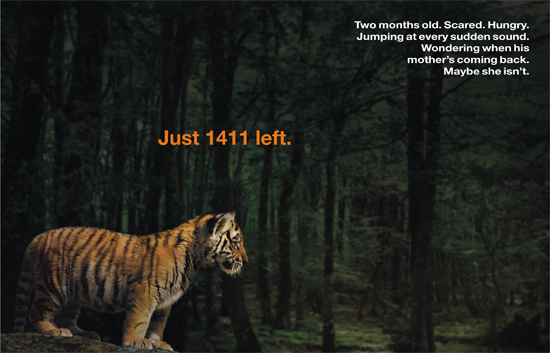
One of the (many) sobering things about this is, fifteen or even ten years ago such a statistic would have sent a chill up my spine; today, it almost comes across as just another piece of bad news.
Then, I would struggle with basic maths but could name practically each and every one of the designated Project Tiger Reserves. I would reel off "40,000 at the turn of the century, only 1800 in 1972, 4000 today", and not always be met with looks of recognition. I'd stay up late and trade the homework completion hour for watching Land of the Tiger on the BBC (the episodes of which are available online - do watch), or devouring Nirmal Ghosh's Jungle Life of India. There was much inspiration to found in the work of people like Billy Arjan Singh, Valmik Thapar, and Ullas Karanth - I missed a day of school once to attend a seminar conducted by Dr.Karanth. Where has the passion gone?
Several among us might have genuinely cared when we were young (and privileged?) enough to do so. The rat race soon beckoned, and we threw in our respective lots; we found a myriad of reasons to not head off the beaten track, and work towards landing a position from which we might be able to make a difference. Perhaps, as far as Project Tiger is concerned, this is where the plot was lost.
I'd like to believe the situation is redeemable, and this looks like a good place to start.
Monday, February 8, 2010
Of Time Mismanagement and Such
There's this theory about life in graduate school I once read about (I can't recall the source I'm about to paraphrase here - PhD Comics?). Broadly speaking, there are three kinds of activities available to the grad student - working, partying and sleeping; however, the average student has only two degrees of freedom. To put it another way, time and energy constraints ensure that one can only go through grad school doing any two out of those three things.
While this is not absolute, it nevertheless rings true when I think back to my University days. I usually can't do without my eight hours of sleep a day, never mind which hours of the day they may be, and so my student life was largely a combination of stop-start slumber, and hours of work which proved just sufficient to stay afloat academically; any partying I might have hoped for was pretty much sacrificed as a result. The few occasions when grad school would bite me in the bum, were usually because of an untimely deviation from this routine - such as a sudden trip to the movies, or a visit to the bar when work needed to be done. Now, I did have my share of fun at University (even if there may be little photographic evidence of the same on my facebook profile), but not to the extent that it could significantly alter or affect the way things were going. If I had really utilised all that 'wasted' time on work instead, I might have marginally improved my GPA, and little else. In hindsight, I had quite a delicately balanced system in place.
An external condition, however, is all that is needed to upset such a balance. When the time came to turn my attention to a job search, and the preparations it involved, my system was thrown into chaos. If I sleepwalked my way through most of grad school, I ended it crossing a busy street on roller-skates during rush hour. I got my degree, but not the job I had been looking for.
The months of being without full-time work were initially a mixture of anxiety and relaxed resignation, for there's little you can do when the market is running on empty. Slowly, however, I found myself having to divide my time almost exclusively between the job hunt and sleeping; anything else seemed like a luxury, yet all that didn't stop me from indulging in what Krish Ashok aptly calls "focussed inactivity and alternative non-value-adding hobbies". The search, not surprisingly, hasn't ended. And now, back in Bangalore, I've volunteered to work for a startup to give myself something constructive to do on the side - effectively, an external condition.
I wonder how I might have dealt with this long spell of joblessness had it arrived, say, just after I was done with my undergraduate degree. Every move I made back then was somehow calibrated with the intention of not screwing up, which has ironically made me rather inertial now (Comfortably numb, but I'm trying to avoid Pink Floyd references!). Would it have been better to mess up earlier? I doubt I would have been preoccupied with pondering time management issues, at least. Anyway, now for some much needed shut-eye.
While this is not absolute, it nevertheless rings true when I think back to my University days. I usually can't do without my eight hours of sleep a day, never mind which hours of the day they may be, and so my student life was largely a combination of stop-start slumber, and hours of work which proved just sufficient to stay afloat academically; any partying I might have hoped for was pretty much sacrificed as a result. The few occasions when grad school would bite me in the bum, were usually because of an untimely deviation from this routine - such as a sudden trip to the movies, or a visit to the bar when work needed to be done. Now, I did have my share of fun at University (even if there may be little photographic evidence of the same on my facebook profile), but not to the extent that it could significantly alter or affect the way things were going. If I had really utilised all that 'wasted' time on work instead, I might have marginally improved my GPA, and little else. In hindsight, I had quite a delicately balanced system in place.
An external condition, however, is all that is needed to upset such a balance. When the time came to turn my attention to a job search, and the preparations it involved, my system was thrown into chaos. If I sleepwalked my way through most of grad school, I ended it crossing a busy street on roller-skates during rush hour. I got my degree, but not the job I had been looking for.
The months of being without full-time work were initially a mixture of anxiety and relaxed resignation, for there's little you can do when the market is running on empty. Slowly, however, I found myself having to divide my time almost exclusively between the job hunt and sleeping; anything else seemed like a luxury, yet all that didn't stop me from indulging in what Krish Ashok aptly calls "focussed inactivity and alternative non-value-adding hobbies". The search, not surprisingly, hasn't ended. And now, back in Bangalore, I've volunteered to work for a startup to give myself something constructive to do on the side - effectively, an external condition.
I wonder how I might have dealt with this long spell of joblessness had it arrived, say, just after I was done with my undergraduate degree. Every move I made back then was somehow calibrated with the intention of not screwing up, which has ironically made me rather inertial now (Comfortably numb, but I'm trying to avoid Pink Floyd references!). Would it have been better to mess up earlier? I doubt I would have been preoccupied with pondering time management issues, at least. Anyway, now for some much needed shut-eye.
Friday, January 29, 2010
So you're an R.I? That don't impress me much..
An oft-recited quip from the Big Joke Book of Desi stereotypes suggests that, the acronym NRI would be more accurate if it were to expand to "Non Returning Indian". By deciding to abort my job hunt in the U.S and return to Bangalore, I have done the unexpected and, it seems, the unthinkable; I'm one of that rare breed, the Returned Indian (R.I for short).
I've said goodbye to campus life as an international student, morning cereal and americano shots, apartment maintenance, credit ratings, impromptu discussions on status and work visas, late-night walks on empty streets, super-fast Internet speeds, online television streaming, access to fifty varieties of beer, on-call drinking buddies, taking complete cleanliness for granted, being complimented on my command over English, and stuffing myself on junk food out of necessity. I say hello once again to filling breakfasts and great coffee, having people in my face all day, my own full-fledged bed (yes), downloading without fear of the authorities, surreptitious drinking and eating-out, the bustle of the streets, impromptu discussions on politics and films (and being expected to have strong opinions on the same), and being rebuked for my appalling Tamil and Hindi.
The reactions of people around me over the last two months have made for some interesting observations. As an RI, that rare being, family members and the extended ones are likely to look upon you as the local zoo management might a white tiger; initially, a lot of fussing over this recent arrival who draws in the eagerly-awaiting crowd, but this soon gives way to puzzlement about how you turned out this way, different from the rest. Recessive gene or not, what went wrong?
Yet, the attitudes of family members (and whatever vested interests they may have in your career path) are much more predictable than those of people who (apparently) have less of a stake in you. When dealing with the 'rest' - close friends, mere acquaintances and assorted hangers-on - you, the RI, can likely expect the following:
1. You will be subjected to intense scrutiny by people who know you well, not least in the way you talk. The slightest change in your accent is all the invitation needed to spark off a confused-desi bashing thread, which is typically kept going in the following way: use a moderately biggish English word and it'll be attributed to the Americanization of you; sprinkle your speech with some colloquial slang, and you'll be accused of trying too hard to fit back in. It's heads-they-win-tails-the-joke's-on-you.
2. Having been abroad and expanded your horizons, that heady citizen-of-the-world feeling will disappear soon; you will be brought down to your home-turf with a resounding thud by those people who are just waiting to pop the question, "So, where do you feel you belong?", and enjoy a knowing smirk at the raw nerve they've touched. Nevertheless, you could rescue the situation by replying "The stretch from Anna Swamy Mudaliar Road up to Wheeler Road extension in Frazer Town, that would be it", showing them that you are not to be outdone in the business of being insular, either.
3. There are several contrasting initial reactions to be had from people meeting you for the first time, and learning of your return. Admiration, for example, typically comes from those who are about to (reluctantly) leave for the US or the UK themselves, and your 'bravery' is just the reassurance they need. There are those who will think you stupid for walking out on your chosen land-of-opportunity, but they'll store your email ID anyway in the hope of soliciting information when it's their turn to depart. You might encounter the odd armchair nationalist, who will reprimand you as soon as he hears the word "America". And, indifference is usually met with when trying to chat up that seemingly attractive someone, who could well be thinking "God please, get back to whereveritis you came from!"
4. The fixation with ordering mineral water "specially for him, he is US-return" wears off soon among people, but with toilet paper - that other great cultural differentiator which gets people inquisitive - it's another thing altogether. If (unlike me, I hasten to add) you're taking your time to acclimatize back to the Indian way, DO NOT let on that you still have rolls stocked up in your bathroom, unless you want to be the subject of much mirth as discussed in points 1 and 2. This being the 21st century, you could be entitled, however, to wonder out loud about an absence of a water-spray/hose-pipe. Just don't call it a health faucet!
It's great to be back.
I've said goodbye to campus life as an international student, morning cereal and americano shots, apartment maintenance, credit ratings, impromptu discussions on status and work visas, late-night walks on empty streets, super-fast Internet speeds, online television streaming, access to fifty varieties of beer, on-call drinking buddies, taking complete cleanliness for granted, being complimented on my command over English, and stuffing myself on junk food out of necessity. I say hello once again to filling breakfasts and great coffee, having people in my face all day, my own full-fledged bed (yes), downloading without fear of the authorities, surreptitious drinking and eating-out, the bustle of the streets, impromptu discussions on politics and films (and being expected to have strong opinions on the same), and being rebuked for my appalling Tamil and Hindi.
The reactions of people around me over the last two months have made for some interesting observations. As an RI, that rare being, family members and the extended ones are likely to look upon you as the local zoo management might a white tiger; initially, a lot of fussing over this recent arrival who draws in the eagerly-awaiting crowd, but this soon gives way to puzzlement about how you turned out this way, different from the rest. Recessive gene or not, what went wrong?
Yet, the attitudes of family members (and whatever vested interests they may have in your career path) are much more predictable than those of people who (apparently) have less of a stake in you. When dealing with the 'rest' - close friends, mere acquaintances and assorted hangers-on - you, the RI, can likely expect the following:
1. You will be subjected to intense scrutiny by people who know you well, not least in the way you talk. The slightest change in your accent is all the invitation needed to spark off a confused-desi bashing thread, which is typically kept going in the following way: use a moderately biggish English word and it'll be attributed to the Americanization of you; sprinkle your speech with some colloquial slang, and you'll be accused of trying too hard to fit back in. It's heads-they-win-tails-the-joke's-on-you.
2. Having been abroad and expanded your horizons, that heady citizen-of-the-world feeling will disappear soon; you will be brought down to your home-turf with a resounding thud by those people who are just waiting to pop the question, "So, where do you feel you belong?", and enjoy a knowing smirk at the raw nerve they've touched. Nevertheless, you could rescue the situation by replying "The stretch from Anna Swamy Mudaliar Road up to Wheeler Road extension in Frazer Town, that would be it", showing them that you are not to be outdone in the business of being insular, either.
3. There are several contrasting initial reactions to be had from people meeting you for the first time, and learning of your return. Admiration, for example, typically comes from those who are about to (reluctantly) leave for the US or the UK themselves, and your 'bravery' is just the reassurance they need. There are those who will think you stupid for walking out on your chosen land-of-opportunity, but they'll store your email ID anyway in the hope of soliciting information when it's their turn to depart. You might encounter the odd armchair nationalist, who will reprimand you as soon as he hears the word "America". And, indifference is usually met with when trying to chat up that seemingly attractive someone, who could well be thinking "God please, get back to whereveritis you came from!"
4. The fixation with ordering mineral water "specially for him, he is US-return" wears off soon among people, but with toilet paper - that other great cultural differentiator which gets people inquisitive - it's another thing altogether. If (unlike me, I hasten to add) you're taking your time to acclimatize back to the Indian way, DO NOT let on that you still have rolls stocked up in your bathroom, unless you want to be the subject of much mirth as discussed in points 1 and 2. This being the 21st century, you could be entitled, however, to wonder out loud about an absence of a water-spray/hose-pipe. Just don't call it a health faucet!
It's great to be back.
Sunday, November 8, 2009
Big Bend Camping..and More
What do you do when you need respite from twelve crazy months of job hunting, interviewing and introspection? What do you do when you get fed up with turning to music, reading, blogging, TV shows and other forms of mental wankery for stimulation?
You get outdoors and do a load of stuff you've never tried before, that's what.
Around a month back, I joined Bulla, RK, Bakri and Raghu on a visit to Big Bend National Park in Southwest Texas. We were also able to fit in a visit to the McDonald observatory, and some spectacular underground caverns at Sonora.
We often come across lists titled Things to do before you turn thirty and the like, which are designed with a view to providing the reader with a reckoner for basic fulfillment. While the suggestions on 'things to do' may vary quite a bit across different compilations, it's probably fair to say I might have doubled my tally on the pre-thirty count of most lists. Some notable first-time experiences on this visit included:
1. Camping out in the wild. This was a campsite, but nothing more. No facilities. Nada. At the mercy of scorpions and snakes. I must add that it was quite a relief to be able to finish off with taking a dump in the Visitors' Center, and avoid having to do it woodland animal style.
2. Trekking through rugged, bear and lion infested, mountainous terrain. The fact that the beasts elected to stay away was well received (only in hindsight).
3. Swimming in a river; in this case, the Rio Grande. That this was a relatively slow-moving stretch, and that we used life-jackets, can be glossed over. This was great consolation for missing out on the canoeing. And, by swimming across and touching the cliff (to the left of the gorge in the pic), we were in contact with Mexico. After Wagha, this marked the second border I've been to.
4. Cooking in the wild. (As an aside, few things beat chai in the wilderness).
5. Going deeper underground and being among weird and wonderful cave formations.

In addition, there the 'star party' at McDonald, a visit to the old German settlement Fredericksburg, and some spectacular birdlife all around - warblers, bluejays, and the turkey vulture pictured below (who knew they existed?).
By the end of the trip, I had a new-found respect for the state of Texas. Being in the liberal student heartland, it was always tempting to think in terms of an Austin-versus-the-rest-of-the-state divide. The landscape magnificent and varied, and the people we encountered extraordinarily friendly and hospitable, contrary to what outsiders might imagine. If you're ever in Lone Star country, one word; explore.
Current Music: Collective Soul - Shine
You get outdoors and do a load of stuff you've never tried before, that's what.
Around a month back, I joined Bulla, RK, Bakri and Raghu on a visit to Big Bend National Park in Southwest Texas. We were also able to fit in a visit to the McDonald observatory, and some spectacular underground caverns at Sonora.
We often come across lists titled Things to do before you turn thirty and the like, which are designed with a view to providing the reader with a reckoner for basic fulfillment. While the suggestions on 'things to do' may vary quite a bit across different compilations, it's probably fair to say I might have doubled my tally on the pre-thirty count of most lists. Some notable first-time experiences on this visit included:
1. Camping out in the wild. This was a campsite, but nothing more. No facilities. Nada. At the mercy of scorpions and snakes. I must add that it was quite a relief to be able to finish off with taking a dump in the Visitors' Center, and avoid having to do it woodland animal style.

2. Trekking through rugged, bear and lion infested, mountainous terrain. The fact that the beasts elected to stay away was well received (only in hindsight).

3. Swimming in a river; in this case, the Rio Grande. That this was a relatively slow-moving stretch, and that we used life-jackets, can be glossed over. This was great consolation for missing out on the canoeing. And, by swimming across and touching the cliff (to the left of the gorge in the pic), we were in contact with Mexico. After Wagha, this marked the second border I've been to.

4. Cooking in the wild. (As an aside, few things beat chai in the wilderness).

5. Going deeper underground and being among weird and wonderful cave formations.


In addition, there the 'star party' at McDonald, a visit to the old German settlement Fredericksburg, and some spectacular birdlife all around - warblers, bluejays, and the turkey vulture pictured below (who knew they existed?).

By the end of the trip, I had a new-found respect for the state of Texas. Being in the liberal student heartland, it was always tempting to think in terms of an Austin-versus-the-rest-of-the-state divide. The landscape magnificent and varied, and the people we encountered extraordinarily friendly and hospitable, contrary to what outsiders might imagine. If you're ever in Lone Star country, one word; explore.
Current Music: Collective Soul - Shine
Wednesday, October 28, 2009
Article on my Cricket Blog
There's a new post up on my cricket blog. The only reason I'm linking it here is that it is essentially a follow-up to this old post, written over two years ago. Quite a few readers had opinions to share back then, so I'm hoping this will re-ignite some of those discussions.
I'm also looking at ending the posting drought on this blog very soon, and should have some new material up in the next couple of weeks.
Current Music: Lily Allen - The Fear
I'm also looking at ending the posting drought on this blog very soon, and should have some new material up in the next couple of weeks.
Current Music: Lily Allen - The Fear
Friday, July 31, 2009
So 1995, So What?

Ever find yourself infuriated by certain words or phrases? The kind whose usage in everyday conversation is often enough to trigger an explosion in your head? Lately, I've discovered that putting a contemporary spin or contextual twist on an otherwise innocuous word is sufficient to drive me nuts. Take, for example, the Americanism "sweet" (to be rolled off the tongue "sweeeet", in order to convey vehement approval), as made famous by this scene from Dude Where's my Car?. Then there's "not" - as in the 'not' jokes, suitably parodied in Borat. The effect of such usage is to not merely chip away at your nerves, but also numb your senses to the extent that you find yourself using those very words.
The latest word to get my goat is "so", used in conjunction with a specific period in time, in such a manner as to ascribe datedness to something. Sample: "You still own a discman? That is so 1999, man!" Or, "Multi-cuisine restaurants are so 1994." And even, "Those clothes are so, like, yesterday" ('Like'? The list is growing). Being an unabashed nostalgic and often prone to living in the past, my annoyance at this currently-in-vogue expression isn't all that surprising.
Perhaps I should take a leaf out of Krish Ashok's book - or a line from his blog, at any rate: "Ranting...is so Blogosphere circa 2003".
Current Music: Therapy? - Bad Karma follows you around
Tuesday, July 14, 2009
Skin deep
During one of my visits to the Bay Area, I chanced upon a copy of the Desi Tribune. As the name suggests, it turned out to be a regional daily catering specifically to California's large Indian population, with an accent on the latest news from back home. It read like an issue of Deccan Chronicle, or the Bangalore Times - poor standards of writing and editing, more information about the lives of b-list celebrities than you'd normally bargain for, and providing some comic relief all the same. That day's issue carried an article about actress Anjana Sukhani, and focused on her statement that she would consider wearing a bikini on screen only if "the role required it". This got me thinking (which is just what you're supposed to do when confronted with material of this sort, right?) about how the bikini has seemingly caused everyone in Bollywood and the audience to re-examine their sensibilities, and has provided so much fodder for the media to fill up print-space and airtime. We've come to the point where actresses, fully aware that displays of bare flesh are likely to have them pigeonholed, must insist that they will be taking up "only serious roles" in the future, if only to reaffirm their acting credentials. It comes with being subject to our society's ultra-high standards.
What has me intrigued, however, is that I seem to remember the likes of Zeenat Aman, Sharmila Tagore, Parveen Babi and Dimple Kapadia (among others) appearing on screen in skimpy swimwear back in the day. How come their credibility doesn't appear to have suffered for it? How come those images have aged gracefully into culthood, as opposed to the notoriety which seems to accompany the ones of today? How come today's heroines have such a big cross to bear, and must resort to the will-wear-if-role-demands-it line when asked about it? Or was it a similar story in the 70s and, belonging to a different era, we'll simply never know about the controversy generated then which might have faded over time? Pop-culture theorists and film junkies, feel free to unleash your greater wisdom on me.
Current Music: Crowded House - Don't dream it's over
What has me intrigued, however, is that I seem to remember the likes of Zeenat Aman, Sharmila Tagore, Parveen Babi and Dimple Kapadia (among others) appearing on screen in skimpy swimwear back in the day. How come their credibility doesn't appear to have suffered for it? How come those images have aged gracefully into culthood, as opposed to the notoriety which seems to accompany the ones of today? How come today's heroines have such a big cross to bear, and must resort to the will-wear-if-role-demands-it line when asked about it? Or was it a similar story in the 70s and, belonging to a different era, we'll simply never know about the controversy generated then which might have faded over time? Pop-culture theorists and film junkies, feel free to unleash your greater wisdom on me.
Current Music: Crowded House - Don't dream it's over
Sunday, June 21, 2009
Federer's feat
Two Sundays ago, Roger Federer's much-awaited win at French Open was a bit of an epiphany in a couple of ways. It served to demonstrate the unifying force that tennis on television has become, in our family; everyone had been glued to the set, eagerly willing on King Roger. I suppose this could be put down to the major events coming along only once in a while, keeping the sport fresh in our collective consciousness, without overkill. And, since it is largely an individual affair, personalities are illuminated all the more in a way they aren't in most team sports.
I was also overpowered by the way Fed had captured everyone's imagination. Has there ever been a more popular champion of our times? When I think of the major sporting heroes over the last decade or so - Michael Jordan, the Williams sisters, Tiger Woods, the Australian cricket team, Michael Schumacher - celebrated they may be, but they've tended to polarise people. The kind of feeling Federer has inspired in us is miles away from the cloying hero-worship one might associate with an Indian cricketer or an actor. Among the onlookers, there were a few who suggested that despite this incredible feat of conquering clay, his bogey surface, the one tag which will always accompany the victory is the absence of his nemesis - Rafael Nadal. But to claim that this triumph is a tainted one is rather unreasonable. Can we really attribute Steffi Graf's domination in the mid-90s to the stabbing of Monica Seles, or indeed the rise of the Williamses to Martina Hingis' injuries and personal problems? Let's just take the best these players have given us, shall we? The history books don't lie.
In a post on my Cricket Blog, I examined the nature of our attitudes toward underdogs and theorised that most of us (Indian fans, anyway) would willingly support an underdog who exudes spirit and gallantry, but not so much one given to stagefright or mental weakness. In tennis terms, I suppose it might explain why a Pat Rafter's Wimbledon near-misses are remembered with much fondness, while a Tim Henman is left to our afterthoughts. But, there is another kind of "underdog" we willingly give our hearts to; the the oldie who is a shadow of his past, yet battles the odds in attempting to do it one last time. Every Indian fan will fondly remember Steve Waugh's final rearguard innings of 80 at the SCG, even though India couldn't force the win. Tennis has thrown up many such examples - Ken Rosewall, trying in vain to win that elusive Wimbledon title as a 42-year old, and the returning Steffi Graf putting Martina Hingis in her place during the French Open final in 1999 for one last title.
Although he is far from finished, I have a suspicion that Federer's Paris sojourn inspired similar emotions. People feared that he might be over the hill, and I personally wondered whether those five setters against Haas and Del Potro might not have drained him both physically and mentally. I vividly recall the case of Pete Sampras in the 1996 French Open, when three five-setters against the likes of Sergei Bruguera, Todd Martin and Jim Courier had taken so much out of him that the eventual winner Kafelnikov swept him aside in the semis. Not so with Fed in 2009, but all along, supporters were just that little bit scared for him. As it turned out, he adapted beautifully, using his serve and often exploiting his opponents' relative weakness at the net to good effect.
Federer's chance to move to fifteen Grand Slam titles adds a compelling edge to this year's Wimbledon (Nadal fans are having it real bad at the moment, aren't they?). It will be particularly interesting to see the challenge posed by Andy Murray - perhaps the Kevin Pietersen of tennis - who is widely tipped to be the main threat to a record-breaker. In the meantime, I'll remember the French 2009 not so much for all the history-making, but for Fed's ability to have enthralled us all collectively. It was no mean feat.
Current Music: Patrick O'Hearn - Homeward Bound
I was also overpowered by the way Fed had captured everyone's imagination. Has there ever been a more popular champion of our times? When I think of the major sporting heroes over the last decade or so - Michael Jordan, the Williams sisters, Tiger Woods, the Australian cricket team, Michael Schumacher - celebrated they may be, but they've tended to polarise people. The kind of feeling Federer has inspired in us is miles away from the cloying hero-worship one might associate with an Indian cricketer or an actor. Among the onlookers, there were a few who suggested that despite this incredible feat of conquering clay, his bogey surface, the one tag which will always accompany the victory is the absence of his nemesis - Rafael Nadal. But to claim that this triumph is a tainted one is rather unreasonable. Can we really attribute Steffi Graf's domination in the mid-90s to the stabbing of Monica Seles, or indeed the rise of the Williamses to Martina Hingis' injuries and personal problems? Let's just take the best these players have given us, shall we? The history books don't lie.
In a post on my Cricket Blog, I examined the nature of our attitudes toward underdogs and theorised that most of us (Indian fans, anyway) would willingly support an underdog who exudes spirit and gallantry, but not so much one given to stagefright or mental weakness. In tennis terms, I suppose it might explain why a Pat Rafter's Wimbledon near-misses are remembered with much fondness, while a Tim Henman is left to our afterthoughts. But, there is another kind of "underdog" we willingly give our hearts to; the the oldie who is a shadow of his past, yet battles the odds in attempting to do it one last time. Every Indian fan will fondly remember Steve Waugh's final rearguard innings of 80 at the SCG, even though India couldn't force the win. Tennis has thrown up many such examples - Ken Rosewall, trying in vain to win that elusive Wimbledon title as a 42-year old, and the returning Steffi Graf putting Martina Hingis in her place during the French Open final in 1999 for one last title.
Although he is far from finished, I have a suspicion that Federer's Paris sojourn inspired similar emotions. People feared that he might be over the hill, and I personally wondered whether those five setters against Haas and Del Potro might not have drained him both physically and mentally. I vividly recall the case of Pete Sampras in the 1996 French Open, when three five-setters against the likes of Sergei Bruguera, Todd Martin and Jim Courier had taken so much out of him that the eventual winner Kafelnikov swept him aside in the semis. Not so with Fed in 2009, but all along, supporters were just that little bit scared for him. As it turned out, he adapted beautifully, using his serve and often exploiting his opponents' relative weakness at the net to good effect.
Federer's chance to move to fifteen Grand Slam titles adds a compelling edge to this year's Wimbledon (Nadal fans are having it real bad at the moment, aren't they?). It will be particularly interesting to see the challenge posed by Andy Murray - perhaps the Kevin Pietersen of tennis - who is widely tipped to be the main threat to a record-breaker. In the meantime, I'll remember the French 2009 not so much for all the history-making, but for Fed's ability to have enthralled us all collectively. It was no mean feat.
Current Music: Patrick O'Hearn - Homeward Bound
Wednesday, June 3, 2009
Keeping it Weird
I suppose I should have written this post a lot earlier, given that I left the city of Austin four months ago. I just didn't want to succumb to the general feeling you get upon leaving a place you've resided in for a long while, and come up with a predictably gushing post straightaway. I wanted to immerse myself in new surroundings, and let time and space provide some perspective. Well, they certainly have; I realise I miss Austin like hell.
I'm glad I spent the last two-and-a-half years studying in Austin, as opposed to a big city like New York or Chicago; I can't imagine a place being more tolerant of a slacker like me (in no way did that tolerance extend to my program of study, though). If anything, it was a bit too much like Bangalore. Being forced to live in a chaotic metropolis might have been better for me in terms of building up survival skills and street-smartness, but I'm not a believer in getting outside your comfort zone if you can help it. If circumstances were to dictate that I remain in the US for a long time - and I hope they don't - I would still rather live in ATX than anywhere else.
In Mohsin Hamid's book The Reluctant Fundamentalist, the Pakistani student protagonist sums up his feelings for New york thus: "I was, in four and a half years, never an American; I was immediately a New Yorker." I suppose I could talk about Austin in similar terms. For example, once when I was in the elevator of the Music Department, humming a classical piece I had just heard, the person just beside me asked me what tune it was and engaged me in a discussion - it was that sort of place.
The Highlights:
A great bunch of 'seniors' who helped us settle in during the first month. Besides going out of their way to help, they made excellent company which was just as well because I somehow never hit it off too well with the people who came in at the same time as me.
The incredibly good public transport system. Being a student I could get anywhere at almost any time of the day for free. It allowed me to get away with being too lazy to acquire a driver's license here.
Zilker Park and Barton Springs, though I didn't go there too often. Particularly memorable were the 4th of July fireworks and the Trail of lights festival.
Being part of the Acoustics Track in my graduate program, which meant belonging to a small but closely-knit community within the Department. Really nice people and some extremely good profs made those Friday Technical Seminars and occasional study sessions good fun. It's a pity I couldn't go on to do a PhD there, but I knew i wasn't cut out for it.
Dr.Wilson's microphone-twirling imitation of Roger Daltrey on the last day of the Transducers class.
Eve and the rest of the crowd at Antone's Record shop, who contributed generously to my cassette collection. Also, getting to watch Eve and the Exiles perform live at the store.
The visits to Half Price Books.
The Monday Jazz nights at Ming's. The food at Ming's deserves a mention too - they do such amazing things with eggplant/brinjal, I think I may have finally overcome my dislike of kathrikai curry and baingan bharta.
The nights spent playing RISK with the Blackstone gang, and later Ticket to Ride and other games with another crowd. My interest in Board Games has been rekindled.
Watching the urban Bat Colony emerge from under the avenue bridge at dusk.
Going to my first football game and cheering the Longhorns in the forty degree heat of September. And otherwise, encountering the legions of football fans decked out in burnt orange, either on their way to the game or setting up barbecues on the University lawns, on any given Saturday.
Hanging out with the Red River gang, jamming way into the night, singing rubbish and even playing the keys after a long time. They even got a strong warning for playing too loud one night!
My stint as the teaching Assistant for the Physics lab. Not only was it a great (and well-paying) job which made me revisit physics in a enjoyable way, it also got me acquainted with many American Undergrads whom I wouldn't have encountered otherwise.
Some of my students dedicating a song to me, to be sung to the tune of Afroman's Because I got high (The chorus went "Because of Suhas, because of Suhas). Too much!
The administrative staff at the Department. who were extremely helpful in dealing with the problems related to academia or paperwork.
My (retired) graduate advisor who was totally flexible with letting me decide what courses to take. I used to see him jogging around campus and was amazed how a person his age could keep himself so fit.
Driving through Barton Hills, with its stunning scenery and the occasional deer crossing our path.
Trivia nights at those Irish Pubs, and the other beer joints we frequented.
Trudy's, particularly for their seemingly bottomless Mexican Martini.
Roaming the crowded 6th on Friday nights, watching scores of undergrads getting drunk and acting silly.
Having Dr.Lo staying with us for two months. Among other things, he showed me how to eat with chopsticks.
The novelty of sitting down to a "no-holds-barred" exam, where we were allowed to bring in anything, even laptops!
The moment last year's election results were announced. I was on campus getting some work done at the time, when a bunch of liberally-inclined (and presumably inebriated) sorority girls nearby broke into a loud song whose chorus went "Obama! Obama!".
Watching all those indie-movies with Bulla and gang at the South by Southwest festival, which even featured live appearances by the cast and director themselves.
And a few regrets:
Not having made more effort to meet up or keep in touch with certain people.
Not taking the opportunity to learn something different, like kayaking or salsa or a new language, given the number of classes available in the Union.
Not making the effort to visit the Austin zoo.
Not visiting a typical Texan barbecue spot, such as Rudy's or the Salt Lick. With most of my friend-circle there being vegetarian, this was never really on the cards.
Not being able to catch Austin City Limits even once.
Intellectual Property closing down.
Not being able to further extend my stay at the University through the recession.
Not being able to land a job in Austin!
Current Music: Shakti - Lady L
I'm glad I spent the last two-and-a-half years studying in Austin, as opposed to a big city like New York or Chicago; I can't imagine a place being more tolerant of a slacker like me (in no way did that tolerance extend to my program of study, though). If anything, it was a bit too much like Bangalore. Being forced to live in a chaotic metropolis might have been better for me in terms of building up survival skills and street-smartness, but I'm not a believer in getting outside your comfort zone if you can help it. If circumstances were to dictate that I remain in the US for a long time - and I hope they don't - I would still rather live in ATX than anywhere else.
In Mohsin Hamid's book The Reluctant Fundamentalist, the Pakistani student protagonist sums up his feelings for New york thus: "I was, in four and a half years, never an American; I was immediately a New Yorker." I suppose I could talk about Austin in similar terms. For example, once when I was in the elevator of the Music Department, humming a classical piece I had just heard, the person just beside me asked me what tune it was and engaged me in a discussion - it was that sort of place.
The Highlights:
A great bunch of 'seniors' who helped us settle in during the first month. Besides going out of their way to help, they made excellent company which was just as well because I somehow never hit it off too well with the people who came in at the same time as me.
The incredibly good public transport system. Being a student I could get anywhere at almost any time of the day for free. It allowed me to get away with being too lazy to acquire a driver's license here.
Zilker Park and Barton Springs, though I didn't go there too often. Particularly memorable were the 4th of July fireworks and the Trail of lights festival.
Being part of the Acoustics Track in my graduate program, which meant belonging to a small but closely-knit community within the Department. Really nice people and some extremely good profs made those Friday Technical Seminars and occasional study sessions good fun. It's a pity I couldn't go on to do a PhD there, but I knew i wasn't cut out for it.
Dr.Wilson's microphone-twirling imitation of Roger Daltrey on the last day of the Transducers class.
Eve and the rest of the crowd at Antone's Record shop, who contributed generously to my cassette collection. Also, getting to watch Eve and the Exiles perform live at the store.
The visits to Half Price Books.
The Monday Jazz nights at Ming's. The food at Ming's deserves a mention too - they do such amazing things with eggplant/brinjal, I think I may have finally overcome my dislike of kathrikai curry and baingan bharta.
The nights spent playing RISK with the Blackstone gang, and later Ticket to Ride and other games with another crowd. My interest in Board Games has been rekindled.
Watching the urban Bat Colony emerge from under the avenue bridge at dusk.
Going to my first football game and cheering the Longhorns in the forty degree heat of September. And otherwise, encountering the legions of football fans decked out in burnt orange, either on their way to the game or setting up barbecues on the University lawns, on any given Saturday.
Hanging out with the Red River gang, jamming way into the night, singing rubbish and even playing the keys after a long time. They even got a strong warning for playing too loud one night!
My stint as the teaching Assistant for the Physics lab. Not only was it a great (and well-paying) job which made me revisit physics in a enjoyable way, it also got me acquainted with many American Undergrads whom I wouldn't have encountered otherwise.
Some of my students dedicating a song to me, to be sung to the tune of Afroman's Because I got high (The chorus went "Because of Suhas, because of Suhas). Too much!
The administrative staff at the Department. who were extremely helpful in dealing with the problems related to academia or paperwork.
My (retired) graduate advisor who was totally flexible with letting me decide what courses to take. I used to see him jogging around campus and was amazed how a person his age could keep himself so fit.
Driving through Barton Hills, with its stunning scenery and the occasional deer crossing our path.
Trivia nights at those Irish Pubs, and the other beer joints we frequented.
Trudy's, particularly for their seemingly bottomless Mexican Martini.
Roaming the crowded 6th on Friday nights, watching scores of undergrads getting drunk and acting silly.
Having Dr.Lo staying with us for two months. Among other things, he showed me how to eat with chopsticks.
The novelty of sitting down to a "no-holds-barred" exam, where we were allowed to bring in anything, even laptops!
The moment last year's election results were announced. I was on campus getting some work done at the time, when a bunch of liberally-inclined (and presumably inebriated) sorority girls nearby broke into a loud song whose chorus went "Obama! Obama!".
Watching all those indie-movies with Bulla and gang at the South by Southwest festival, which even featured live appearances by the cast and director themselves.
And a few regrets:
Not having made more effort to meet up or keep in touch with certain people.
Not taking the opportunity to learn something different, like kayaking or salsa or a new language, given the number of classes available in the Union.
Not making the effort to visit the Austin zoo.
Not visiting a typical Texan barbecue spot, such as Rudy's or the Salt Lick. With most of my friend-circle there being vegetarian, this was never really on the cards.
Not being able to catch Austin City Limits even once.
Intellectual Property closing down.
Not being able to further extend my stay at the University through the recession.
Not being able to land a job in Austin!
Current Music: Shakti - Lady L
Sunday, May 24, 2009
The BIOTE Diaries: Exit Hamster
With his rounded apple-cheeks and squeaky giggle, and his penchant for spewing technical gibberish, the Hamster proved to be a real cartoon; a cross between a Hanna-Barbera character and an IT geek. I (secretly) gave him the moniker partly because of his rodent-like appearance and mannerisms, and partly after a similarly annoying insider who followed the Australian team around in Tim May's book, Mayhem. Heaven knows why he decided to temporarily leave the Indian office and seek a project from the Sacramento center, given the barren nature of the job scene here. He arrived here a month-and-a-half ago, five years of work experience under his belt, having never lived away from home before. Being familiar with the bouts of homesickness and sudden helplessness which us mollycoddled Indian bachelors face when confronted with alien surroundings, we did our best to set him at ease and help him with the initial adjustments.
As early as on the third day from his arrival, the Hamster gave us an indication that he was all set to make a royal pest of himself. In this previous post, I talked about the stove-cleaning incident in the apartment which left me completely bemused. Let's just say as soon as his eyes fell upon the stove covered with the imprints of spluttering oil and gravy, the Hamster saw an attention-grabbing opportunity. Summoning up all of his whistle-blowing intent with the enthusiasm of an eighth-standard teacher's pet, he promptly complained to the office guest house coordinator of the same and earned us a reprimand. Well, I suppose we had it coming, but still..
Despite all the homesickness, the fairly orderly nature of the house meant that he became a little too comfortable, not lifting a finger to help with the cooking or cleaning. Over time, he would demonstrate previously unseen levels of tight-fistedness, seemingly believing in high thinking, simple living and maximum scavenging - but taking the last two much more seriously. He appeared to be a storehouse of technical knowledge, meticulously poring over books and numerous pdf files, and claiming mastery over several technologies on his three-page resume. He also seemed to think it was his duty to share his infinite knowledge and resources for the betterment of mankind, and subjected us to the same. Now this wouldn't necessarily be a bad thing, when you consider his standing as an experienced pro and our state of being struggling engineers on the look out for adequate jobs. The problem was, our man's enthusiasm was greatly in excess of his ability to put across ideas. In his almost embarrasing excitement at dispensing advice, he often got way ahead of himself - whenever he spoke, his brain-mouth coordination seemed to disappear in a flash, and he ended up being plain incoherent. On most nights upon our return from the office, he would unwittingly excite the tinge of regionalism in two of my roomies, with whom he shared a common language. Typically, they would switch to the online stream of the regional channel's Election 2009 coverage, yak excitedly about the manifestos of the local politicians, and eventually drag us all into a their-state-versus-rest-of-India debate. The upshot of all this was, not only did it prevent the rest of us from crashing immediately after a long day's work (much to our chagrin), it elicited several complaints from the neighbours directly a floor below - whom we had successfully managed to antagonise earlier through the ill-advised move of playing cricket in the corridor.
He was as insufferable in the office as in the apartment, apple-polishing the associates whenever possible. During the classroom sessions he attended along with us, he displayed the peculiar habit of giving off a stifled laugh - sort of like the snickering of Muttley - upon hearing a random word, for no apparent reason. For example:
INSTRUCTOR: Struts is a widely used framework...
HAMSTER: Framework ehh heh eh heh
INSTRUCTOR: ...which you might find confusing initially..
HAMSTER: Confusing ehh heh ehh eh
If this scene were a cartoon strip, you'd have thought balloons with the word "spastic" floating over most of our heads. Eventually, he seemed to single me out for special treatment. I suddenly became the focus of his gyaan-giving trips, with him stopping about twenty times a day to peer over me working at my laptop, and professing advice on how do it differently. As I said earlier, he probably had only the best intentions, but somehow ended up sounding like Donald Duck on crack. Unfortunately one day, he happened to ask me a couple of questions after a particular session during which I had completely switched off, and came to the conclusion that I was suffering from attention deficiency syndrome and needed help. More gyaan from his end, then. In every ensuing session, he would suddenly turn to me with a weird smile on his face, one that seemed to say "So how's the concentration thingy coming along?", as well as "Got you by the balls!" at once. At this point, I decided I was having enough, and something had to give. I remembered Tim May's words, "Alcohol is the solution", and decided I needed to apply the same to this problem at hand. What could I do, get him drunk before a session to sedate him? Nah, not plausible, he'd probably end up talking all the more. Give him a round of straight talking? Probably wouldn't get through his thick skull. When and how would we get rid of him?
Two of the other roomies ended up solving the issue for me, bless them. I earlier whined about their stinginess and their obsession with keeping accounts to the last detail; but on reflection, managing accounts and expenditure for the entire lot is a thankless task and requires much focus and bloody-mindedness, and for that they deserved credit. Unknown to us, they got into some sort of a bitter argument with Hamster, ironic given the amount of Election revelry they had been indulging in together over the last month. They claimed that Hamster was unwilling to pay up his dues for the month, because he was unhappy with some of the items he was being made to pay for. Hamster told us instead they were coercing him to pay for the petrol/gas, which we had initially agreed would not be split even, and was adamant they were out to fleece him. The roomies then revealed that we had only recently revised the agreement on the petrol (apparently, I was not around at the time), and Hamster was trying to get off cheaply. Whatever breakdown in communication had transpired, the rest of us were being kept in the dark and simply decided to let the dispute stay between them. A few days later, Hamster got a call from a friend in town saying he would be away for a few months and subletting his apartment; he jumped at the opportunity of being able to use his friend's home, and was gone in the blink of an eye. He also announced he would be working from home for a long while, so we wouldn't be seeing him at office. A little later, I was soaking up a stiff drink and the sudden peaceful feeling which seemed to have engulfed the apartment.
Current Music: Coldplay - Viva La Vida
As early as on the third day from his arrival, the Hamster gave us an indication that he was all set to make a royal pest of himself. In this previous post, I talked about the stove-cleaning incident in the apartment which left me completely bemused. Let's just say as soon as his eyes fell upon the stove covered with the imprints of spluttering oil and gravy, the Hamster saw an attention-grabbing opportunity. Summoning up all of his whistle-blowing intent with the enthusiasm of an eighth-standard teacher's pet, he promptly complained to the office guest house coordinator of the same and earned us a reprimand. Well, I suppose we had it coming, but still..
Despite all the homesickness, the fairly orderly nature of the house meant that he became a little too comfortable, not lifting a finger to help with the cooking or cleaning. Over time, he would demonstrate previously unseen levels of tight-fistedness, seemingly believing in high thinking, simple living and maximum scavenging - but taking the last two much more seriously. He appeared to be a storehouse of technical knowledge, meticulously poring over books and numerous pdf files, and claiming mastery over several technologies on his three-page resume. He also seemed to think it was his duty to share his infinite knowledge and resources for the betterment of mankind, and subjected us to the same. Now this wouldn't necessarily be a bad thing, when you consider his standing as an experienced pro and our state of being struggling engineers on the look out for adequate jobs. The problem was, our man's enthusiasm was greatly in excess of his ability to put across ideas. In his almost embarrasing excitement at dispensing advice, he often got way ahead of himself - whenever he spoke, his brain-mouth coordination seemed to disappear in a flash, and he ended up being plain incoherent. On most nights upon our return from the office, he would unwittingly excite the tinge of regionalism in two of my roomies, with whom he shared a common language. Typically, they would switch to the online stream of the regional channel's Election 2009 coverage, yak excitedly about the manifestos of the local politicians, and eventually drag us all into a their-state-versus-rest-of-India debate. The upshot of all this was, not only did it prevent the rest of us from crashing immediately after a long day's work (much to our chagrin), it elicited several complaints from the neighbours directly a floor below - whom we had successfully managed to antagonise earlier through the ill-advised move of playing cricket in the corridor.
He was as insufferable in the office as in the apartment, apple-polishing the associates whenever possible. During the classroom sessions he attended along with us, he displayed the peculiar habit of giving off a stifled laugh - sort of like the snickering of Muttley - upon hearing a random word, for no apparent reason. For example:
INSTRUCTOR: Struts is a widely used framework...
HAMSTER: Framework ehh heh eh heh
INSTRUCTOR: ...which you might find confusing initially..
HAMSTER: Confusing ehh heh ehh eh
If this scene were a cartoon strip, you'd have thought balloons with the word "spastic" floating over most of our heads. Eventually, he seemed to single me out for special treatment. I suddenly became the focus of his gyaan-giving trips, with him stopping about twenty times a day to peer over me working at my laptop, and professing advice on how do it differently. As I said earlier, he probably had only the best intentions, but somehow ended up sounding like Donald Duck on crack. Unfortunately one day, he happened to ask me a couple of questions after a particular session during which I had completely switched off, and came to the conclusion that I was suffering from attention deficiency syndrome and needed help. More gyaan from his end, then. In every ensuing session, he would suddenly turn to me with a weird smile on his face, one that seemed to say "So how's the concentration thingy coming along?", as well as "Got you by the balls!" at once. At this point, I decided I was having enough, and something had to give. I remembered Tim May's words, "Alcohol is the solution", and decided I needed to apply the same to this problem at hand. What could I do, get him drunk before a session to sedate him? Nah, not plausible, he'd probably end up talking all the more. Give him a round of straight talking? Probably wouldn't get through his thick skull. When and how would we get rid of him?
Two of the other roomies ended up solving the issue for me, bless them. I earlier whined about their stinginess and their obsession with keeping accounts to the last detail; but on reflection, managing accounts and expenditure for the entire lot is a thankless task and requires much focus and bloody-mindedness, and for that they deserved credit. Unknown to us, they got into some sort of a bitter argument with Hamster, ironic given the amount of Election revelry they had been indulging in together over the last month. They claimed that Hamster was unwilling to pay up his dues for the month, because he was unhappy with some of the items he was being made to pay for. Hamster told us instead they were coercing him to pay for the petrol/gas, which we had initially agreed would not be split even, and was adamant they were out to fleece him. The roomies then revealed that we had only recently revised the agreement on the petrol (apparently, I was not around at the time), and Hamster was trying to get off cheaply. Whatever breakdown in communication had transpired, the rest of us were being kept in the dark and simply decided to let the dispute stay between them. A few days later, Hamster got a call from a friend in town saying he would be away for a few months and subletting his apartment; he jumped at the opportunity of being able to use his friend's home, and was gone in the blink of an eye. He also announced he would be working from home for a long while, so we wouldn't be seeing him at office. A little later, I was soaking up a stiff drink and the sudden peaceful feeling which seemed to have engulfed the apartment.
Current Music: Coldplay - Viva La Vida
Monday, May 4, 2009
Don't Become a Techie: Reason #47
A relative who works at Intuit Inc., Mountain View, told me of Wipro chairman Azim Premji giving a talk at their California headquarters recently. One of the issues he had apparently touched upon was that of Indians returning from the US, which naturally got me very interested considering, like Yossarian stuck in Pianosa, I've always been hell bent on eventually returning to my home country only to find some 22 potential catches acting as obstacles in my path. In a thinly-veiled fit of nationalism, he commented that US-returnees were "cultural misfits" in the Indian corporate environment, and thus better off working in America which affords them the sort of work culture they might have grown accustomed to in the recent past. He added that Wipro would soon stop recruiting these kinds of applicants for Indian offices and post them in the US, where they belonged, instead. He cited the number of such people who were only too happy to get back to the US after a returning stint in India as justification. (It's difficult to escape the feeling that the translation might read: "Indian IT professionals are a largely one-dimensional lot, given to doing as they're told without really questioning everything around them, making them a manager's delight. Having US-returnees, with their revised expectations and their newly-acquired notions of voicing opinions, of being treated on par with their seniors in the workplace - not to mention their ridiculous salary demands - would be a hindrance to the conveniently implicit, understood hierarchical system prevalent in corporate India".)
If this is a common perception, consider an observation which anyone who's worked with a major IT firm such as Infosys, TCS, Wipro, or Cognizant will attest to. Such companies, whose customer base is largely made up of American clients, are extremely conscious of the image they project overseas; one of their major concerns is that many of their employees may be a liability when it comes to the art of schmoozing with foreign client representatives. They spend substantial amounts of time and money on holding training programs which deal with the "soft skills" aspect, covering everything from US workplace lingo and warnings about chatting with your co-workers in a regional language, to table-manners and fork-and-knife etiquette. So, us wannabe returnees will supposedly have a tough time fitting in with those who are preoccupied with trying to fit in.
Rich!
Current Music: Tiger Army - Through the Darkness
If this is a common perception, consider an observation which anyone who's worked with a major IT firm such as Infosys, TCS, Wipro, or Cognizant will attest to. Such companies, whose customer base is largely made up of American clients, are extremely conscious of the image they project overseas; one of their major concerns is that many of their employees may be a liability when it comes to the art of schmoozing with foreign client representatives. They spend substantial amounts of time and money on holding training programs which deal with the "soft skills" aspect, covering everything from US workplace lingo and warnings about chatting with your co-workers in a regional language, to table-manners and fork-and-knife etiquette. So, us wannabe returnees will supposedly have a tough time fitting in with those who are preoccupied with trying to fit in.
Rich!
Current Music: Tiger Army - Through the Darkness
Tuesday, April 28, 2009
Rahman's Fab Five: Redux
I've shamelessly decided to piggyback on Swaroop's post, Rahman's Fab Five, and compile my own list. I did plan on putting up a Rahman-centric post on more than one occasion, but was too lazy to get down to it. So it seems Swaroop's list has provided me with an excuse to finally indulge and get this out of the way.
While I often claim to be an albums-and-not-singles kind of listener, my approach to music records is rather basal, focusing more on nostalgic value and spur-of-the-moment-feeling. Since I won't be able to dissect Rahman's albums with the same artfulness as Swaroop, my choices are perhaps more a reflection of the raw emotion and memories they bring with them. I grew up on a steady diet of Rahman's music through the 90s, but after the turn of the decade I tended to miss out on some of his later masterpieces. This can be put down to the fact that, from the end of school up till around the third year of college, I went through a phase where I thought of myself as a proper metalhead and was surrounded by peers whose musical philosophy was of the "louder the better" variety. Rahman was never far away however, and my renewed interest over the years has been rewarding. The post-2000 stuff also offers plenty from his catalog waiting to be discovered by me, definitely something to look forward to.
Again, this is not an all-time top five list, which is why Roja and Thiruda Thiruda don't figure in it. Rather, it is a loosely-chosen list of albums which perhaps best represent the spark that Rahman's music has time and again provided to the otherwise mundane process of getting on with life.
1. Rang De Basanti: While it is by no means one of Rahman's stronger efforts, I associate RDB with some really good times. Like the first half of the movie, it has a freshness about it that refuses to go away, and every song is an earworm. There was a trip to Kochi with friends in early 2006, during which the title track was played relentlessly, and it has since been stuck in my head. It was quite a masterstroke to get Daler Mehndi to sing it, briefly putting everyone's favourite Punjab da Puttar back on the charts. There's the delightfully cheesy Lose Control/ Pathashala, filled with mindless lyrics. Lukka Chuppi was a song which grew on me thanks to my Austin roommate who listened to it on repeat; Lata and ARR's interlocking verses are a treat, as is the lilting melody of Tu Bin Bataye. Roobaroo, however, stood out for me because it somehow managed to legitimise the ridiculous climax of the movie when I saw it for the first time; the fact that a simple tune (with the acoustic guitar providing a nice touch) was able provide this kind of uplift to a movie was simply the work of a genius. Overall, this is the sort of effort which ARR could probably have come up with in his sleep, but what the hell, it's all good.
2. Kaadhalan: There are two abiding memories of my vacation in Madras during the winter of 1994 - watching Shane Warne spin his web of magic around the Englishmen (particularly this hat-trick at the MCG) on the telly, and listening to the neighbourhood boys discussing the vagaries of the lyrics from the Kaadhalan OST, especially the superhits Urvasi and Muqabala. Now, this album is possibly the best example of how dubbing Tamil music into Hindi loses much of the sting of the original. The Hindi equivalent has not aged well, and many 'Northie' friends have pointed out that the lyrics are nonsense. Indeed, my clueless 11-year old self could not figure out why an adolescent might get a kick out of irritating a girl with lines like "Oosi pola odambirunda thevayille pharmacy". The bottom line is that such music was not conceived with the intention of fitting into the Bollywood scheme of things, and as a result is much more enjoyable when taken in its original context. Anyhow, this soundtrack is really diverse and contains barely any filler; there's the beautiful, sensitively crafted Ennavale, the earthy Erani Kuradhani (Gopala), the eminently hummable Kadhalikum Pennin, and of course that hilarious ode to Madras Bashai, Pettai Rap. The album sure is one hell of a wicked ride.
3. Rangeela: Talk about a seamless transition. Rahman's first original score in Hindi is chock-full of dependable delights. I'll remember this one in particular because a relative handed me the tape long before the songs were ingrained in public consciousness, with the words "Listen to this. This is going to be the next big thing." In what must have seemed like an unlikely arrangement at the time, Asha Bhonsle does the playback for 21-year old Urmila Matdonkar in Tanha Tanha quite stunningly. Asha also features on the infectious Rangeela Re, while Udit Narayan shines on Yaaro Sun Lo Zara, and Kya Kare ya na Kare. My personal favourite, however, is Mangta Hai Kya, with its pulsating, tense buildup and agitated percussion before Shweta Shetty's seductive vocal takes over. Indeed, just as he resurrected Daler Mehndi with RDB, Rahman provides Ms.Shetty with probably the high point of her career. Who would have thought she was capable of hitting those high notes?
4. Bombay: So distressed were we when Kuchi Kuchi Rakamma displaced Didi Tera from its long-standing no.1 spot on the Satish Shah-hosted countdown show Philips Top Ten, we actually wanted to get everyone in the building to sign a petition asking Zee Telefilms for a reversal (In retrospect, WTF were we thinking?). Rahman won out, and the gain was mine as I slowly got exposed to some of the best music I had ever heard. Bombay is one of those albums from which it's just impossible to single out a favourite tune. Kannalane, brilliantly sung by KS Chithra, haunts me every time I listen to it. Humma sounds equally awesome in Hindi and Tamil, Uyire is the album's moment of tenderness, and the Bombay Theme is simply one of the best instrumentals ever. Of late, I've been hooked onto Poovukku Enna (the "Halla Gulla" song), which previously used to annoy the crap out of me. All of a sudden, amidst a bassline which lends a sense of irreverence to the song, the yelling of those kids seems to bring out the..er..kid in me.
5. Indian/Hindustani: Indian occupies a strange, almost latent position in the Rahman catalog. I mean, ask a person to name as many Rahman albums as he can remember and the chances are Indian would figure very late in the list, if at all; but play him Akadanu Naanga and suddenly the memories start flooding back. I'll remember it for some of the most bouncy, energetic tunes ARR ever composed. Among them, Maya Machindram and Telephone Manipol, the latter featuring some memorable vocal work from the teenaged Harini. There's also the sedate and heartwarming Pachai Kiligal , sung by Yesudas.
Phew, that took some effort. Now if you'll excuse me, I have fifteen years' worth of music to catch up on.
Current Music: Thiruda Thiruda - Putham Pudu Boomi
While I often claim to be an albums-and-not-singles kind of listener, my approach to music records is rather basal, focusing more on nostalgic value and spur-of-the-moment-feeling. Since I won't be able to dissect Rahman's albums with the same artfulness as Swaroop, my choices are perhaps more a reflection of the raw emotion and memories they bring with them. I grew up on a steady diet of Rahman's music through the 90s, but after the turn of the decade I tended to miss out on some of his later masterpieces. This can be put down to the fact that, from the end of school up till around the third year of college, I went through a phase where I thought of myself as a proper metalhead and was surrounded by peers whose musical philosophy was of the "louder the better" variety. Rahman was never far away however, and my renewed interest over the years has been rewarding. The post-2000 stuff also offers plenty from his catalog waiting to be discovered by me, definitely something to look forward to.
Again, this is not an all-time top five list, which is why Roja and Thiruda Thiruda don't figure in it. Rather, it is a loosely-chosen list of albums which perhaps best represent the spark that Rahman's music has time and again provided to the otherwise mundane process of getting on with life.
1. Rang De Basanti: While it is by no means one of Rahman's stronger efforts, I associate RDB with some really good times. Like the first half of the movie, it has a freshness about it that refuses to go away, and every song is an earworm. There was a trip to Kochi with friends in early 2006, during which the title track was played relentlessly, and it has since been stuck in my head. It was quite a masterstroke to get Daler Mehndi to sing it, briefly putting everyone's favourite Punjab da Puttar back on the charts. There's the delightfully cheesy Lose Control/ Pathashala, filled with mindless lyrics. Lukka Chuppi was a song which grew on me thanks to my Austin roommate who listened to it on repeat; Lata and ARR's interlocking verses are a treat, as is the lilting melody of Tu Bin Bataye. Roobaroo, however, stood out for me because it somehow managed to legitimise the ridiculous climax of the movie when I saw it for the first time; the fact that a simple tune (with the acoustic guitar providing a nice touch) was able provide this kind of uplift to a movie was simply the work of a genius. Overall, this is the sort of effort which ARR could probably have come up with in his sleep, but what the hell, it's all good.
2. Kaadhalan: There are two abiding memories of my vacation in Madras during the winter of 1994 - watching Shane Warne spin his web of magic around the Englishmen (particularly this hat-trick at the MCG) on the telly, and listening to the neighbourhood boys discussing the vagaries of the lyrics from the Kaadhalan OST, especially the superhits Urvasi and Muqabala. Now, this album is possibly the best example of how dubbing Tamil music into Hindi loses much of the sting of the original. The Hindi equivalent has not aged well, and many 'Northie' friends have pointed out that the lyrics are nonsense. Indeed, my clueless 11-year old self could not figure out why an adolescent might get a kick out of irritating a girl with lines like "Oosi pola odambirunda thevayille pharmacy". The bottom line is that such music was not conceived with the intention of fitting into the Bollywood scheme of things, and as a result is much more enjoyable when taken in its original context. Anyhow, this soundtrack is really diverse and contains barely any filler; there's the beautiful, sensitively crafted Ennavale, the earthy Erani Kuradhani (Gopala), the eminently hummable Kadhalikum Pennin, and of course that hilarious ode to Madras Bashai, Pettai Rap. The album sure is one hell of a wicked ride.
3. Rangeela: Talk about a seamless transition. Rahman's first original score in Hindi is chock-full of dependable delights. I'll remember this one in particular because a relative handed me the tape long before the songs were ingrained in public consciousness, with the words "Listen to this. This is going to be the next big thing." In what must have seemed like an unlikely arrangement at the time, Asha Bhonsle does the playback for 21-year old Urmila Matdonkar in Tanha Tanha quite stunningly. Asha also features on the infectious Rangeela Re, while Udit Narayan shines on Yaaro Sun Lo Zara, and Kya Kare ya na Kare. My personal favourite, however, is Mangta Hai Kya, with its pulsating, tense buildup and agitated percussion before Shweta Shetty's seductive vocal takes over. Indeed, just as he resurrected Daler Mehndi with RDB, Rahman provides Ms.Shetty with probably the high point of her career. Who would have thought she was capable of hitting those high notes?
4. Bombay: So distressed were we when Kuchi Kuchi Rakamma displaced Didi Tera from its long-standing no.1 spot on the Satish Shah-hosted countdown show Philips Top Ten, we actually wanted to get everyone in the building to sign a petition asking Zee Telefilms for a reversal (In retrospect, WTF were we thinking?). Rahman won out, and the gain was mine as I slowly got exposed to some of the best music I had ever heard. Bombay is one of those albums from which it's just impossible to single out a favourite tune. Kannalane, brilliantly sung by KS Chithra, haunts me every time I listen to it. Humma sounds equally awesome in Hindi and Tamil, Uyire is the album's moment of tenderness, and the Bombay Theme is simply one of the best instrumentals ever. Of late, I've been hooked onto Poovukku Enna (the "Halla Gulla" song), which previously used to annoy the crap out of me. All of a sudden, amidst a bassline which lends a sense of irreverence to the song, the yelling of those kids seems to bring out the..er..kid in me.
5. Indian/Hindustani: Indian occupies a strange, almost latent position in the Rahman catalog. I mean, ask a person to name as many Rahman albums as he can remember and the chances are Indian would figure very late in the list, if at all; but play him Akadanu Naanga and suddenly the memories start flooding back. I'll remember it for some of the most bouncy, energetic tunes ARR ever composed. Among them, Maya Machindram and Telephone Manipol, the latter featuring some memorable vocal work from the teenaged Harini. There's also the sedate and heartwarming Pachai Kiligal , sung by Yesudas.
Phew, that took some effort. Now if you'll excuse me, I have fifteen years' worth of music to catch up on.
Current Music: Thiruda Thiruda - Putham Pudu Boomi
Wednesday, April 22, 2009
Don't Give a Peep

This has been a particularly unproductive week, and for that I can blame Television all over again. I've stumbled upon this funny British sitcom and have been hooked for a while now. I've been mostly out of the TV game for the last few years, and generally watch only on recommendation. After watching the first few episodes, I found myself wondering how no one ever told me about Peep Show, given that it's five seasons old. Then again, accidental discoveries are the most memorable ones, so whenever I hear people talk about this show I can feel quietly smug about my nose for good TV programming.
Peep Show gets its name from the fact that the two main characters' lives are seen mostly from their own points of view, as though the camera were held in their hand all along. We get to hear their thoughts when the scene shifts to their individual POV. The premise is fairly simple; it follows the misadventures of two loser roommates, Mark and Jeremy (played by comedic duo David Mitchell and Robert Webb respectively), in their mostly futile attempts toward gaining social acceptance and wooing the women in their lives. They're essentially two ordinary blokes to whom weird things happen. Suitably, they are a study in contrast. Imagine George Constanza as a history nerd with even lower levels of self-esteem, and Joey Tribbiani as a desperate slacker with a nasty streak, and you'll get an idea...ah forget it. No point in trying to form analogies with other sitcoms, just watch and find out. They're well supported by a stellar set of characters. Among them, Sophie, co-worker and the object of Mark's confused affections; Super Hans, Jeremy's band-mate and fellow crack-addict; Johnson, Mark's smooth-talking boss; and Nancy, the American girl briefly married to Jeremy for visa purposes.
One thing I've always liked about British sitcoms - and Peep Show is no exception in this regard - is that even when they're flinging the most obvious jokes or predictable plot developments in your face, they manage to make you laugh out loud all the same. That comes with ace dialogue delivery and acting backed up by a razor-sharp script. Consider the scene in the office where Mark has managed to find the password to Sophie's email account. He's surfing through her inbox, and you know what's going to happen next; Sophie appears and catches him in the act. But it's all executed so brilliantly, you can't help but guffaw. And, rather than providing the characters with catchphrases, the creators seem to have hit upon an endless supply of memorable oneliners.
Where Peep Show really sets itself apart is the boldly obnoxious nature of its content - it relies on what many reviewers like to call the "cringe factor". It's all very bleak and cynical, and the fact that the main characters often come across as first-class jerks with little scope for self-betterment means it won't appeal to everybody. It still manages to be very realistic; I mean, you find yourself empathising with their problems but can't approve or sympathise with their actions. The situational humour revolves mostly around sex, drugs, liberal use of profanities, misanthropy, anger management and still more sex, pushing it firmly into 'adult' territory. That has probably denied it airtime on mainstream television, though I'm guessing it might have become a sensation in Britain by now (it is apparently selling very well on DVD). While it's true that shows like South Park and Family Guy are also characterised by offensive humour, they make full use of the cartoon medium to realise their ends. Peep Show, on the other hand, does not deal in escapism or shock value. It has a natural feel to it, switching scenes effortlessly back and forth, and ends up being (perversely) believable.
It's a pity each season is just six episodes long; every episode leaves me asking for more. Catch it online if you can, for it'll save you the trouble of having to look far and wide for the DVDs. I know I'll be buying them eventually.
Current Music: Alice Cooper - No More Mr.Nice Guy
Saturday, April 11, 2009
The BIOTE Diaries: Down in a Dump
It's a really good thing this apartment complex has a 24-hour gym on the premises. It provides a reassuring and necessary constant to the daily grind, but being just about the only place for miles which stays open later then 10 P.M, there was never much of a choice when it came to looking for things to do here. The other night, after a long spell of steady rain, I was making my way to the gym as usual after work when I was greeted by a weird, almost surreal sight. I walked along the extremely narrow footpath, flanked by a garden on either side, and noticed that the thousands of resident snails had crawled out onto the path, leaving me precious little space to actually walk to the gym entrance. I had move forth on tiptoe to avoid stepping on them, and felt as if I was in Commander Keen, that old 2-D PC game in which the hero dodges poison slugs by jumping or using a pogo stick. It was a funny feeling, coming as it did in the middle of one of the more sordid concrete wastelands of suburban California.
Life indoors has been less memorable lately. It sucks having to remain in office till late, given that we've already missed a few of the pizza parties and bingo nights that keep happening in the building. While I've grown used to spending time by myself and even being cocooned if necessary, I'd at least like to be able to meet some people here. The University often kept me equally busy, but there were still places to go whenever you wanted to step out, back then. I'm getting a little fatigued with all this talk of H1-B visa processing, amazing job offers which some lucky souls have managed to snap up, requisite skill-sets on resumes, and engineers harbouring nothing but wet dreams of six-figure salaries in this country. Quite often, it's the little things that grate on your mind and it's all you can to do to laugh them off. The visa applications have been delegated to the India office, and the communication levels from their end have been insufficient (to put it mildly), resulting in a string of laughably pointless mails to and fro. Anyway, I'm trying to channel all this annoyance into planning my escape from this industry. Why is it that the monetary rewards of career paths seem to be in inverse proportion to how mentally stimulating they actually are?
Current Music: Avial - Nada Nada
Life indoors has been less memorable lately. It sucks having to remain in office till late, given that we've already missed a few of the pizza parties and bingo nights that keep happening in the building. While I've grown used to spending time by myself and even being cocooned if necessary, I'd at least like to be able to meet some people here. The University often kept me equally busy, but there were still places to go whenever you wanted to step out, back then. I'm getting a little fatigued with all this talk of H1-B visa processing, amazing job offers which some lucky souls have managed to snap up, requisite skill-sets on resumes, and engineers harbouring nothing but wet dreams of six-figure salaries in this country. Quite often, it's the little things that grate on your mind and it's all you can to do to laugh them off. The visa applications have been delegated to the India office, and the communication levels from their end have been insufficient (to put it mildly), resulting in a string of laughably pointless mails to and fro. Anyway, I'm trying to channel all this annoyance into planning my escape from this industry. Why is it that the monetary rewards of career paths seem to be in inverse proportion to how mentally stimulating they actually are?
Current Music: Avial - Nada Nada
Sunday, March 29, 2009
The BIOTE Diaries: Beating the Bookstore

You know it's the start of a new semester at the University of Texas at Austin when you hear a certain clamour on Guadalupe St., known locally as The Drag. Students throng the stores on the Drag near campus, hastily stocking up for the new term, which means having to buy a whole new set of books. Make no mistake, books are expensive here, and that goes double for textbooks. Naturally, a bunch of places have sprung up where you can get your stuff secondhand or at a reasonable discount, among them a place called Beat the Bookstore. But "Beat the Bookstore" is no longer just the name of a store, it is now an unofficial motto of UT students, a philosophy. And this philosophy has trickled down to the issue of shopping at general bookstores, the ones which cater to the needs of Literature and History majors (among others), and book-browsers like me. But the situation only became clear to me during my final week as a resident of Austin, Texas. It felt like the end of an era in more ways than one.
On a Tuesday that week, around the same time I came to hear of Premier Bookshop's impending closure - and I like to believe this was more than mere coincidence - I was walking down the Drag when I saw the sign, a sign that the economic crisis was having its effect right in front of my eyes; the University had decided its main bookstore was dispensable, and would be closing it down soon. I stood in front of Intellectual Property, the place where I had spent many a leisurely hour over the past couple of years, and slowly read the announcement that they were discounting their entire stock by a sizable amount, before closing for good in a month's time. I duly rushed in to pick up one last title from there. On the Road (Jack Kerouac), which had in fact been recommended to me years ago, was unavailable, so I settled for Crash by J.G Ballard, at a reasonable 40 percent off.
To those Bangaloreans who swear by smaller places like Premier, Blossom, Bookworm and their ilk, the picture of IP above probably suggests that it was just another big corporate establishment with all the trappings, but devoid of any soul. The reality was way different; compared to glitzy monstrosities such as Borders or Barnes and Noble, IP was positively quaint. It combined the proprietary helpfulness of Premier with the immaculate arrangement of Sankar's, and the interiors were simple yet inviting. If you look closely at the pic, you'll notice a narrow long blackboard above the shelves running the length of the walls; this was typically decorated with quotations from literary figures, inscribed in chalk. Best of all, it was a peaceful place staffed by ever-smiling book enthusiasts who didn't mind if you hung around and flipped pages indefinitely. They had an excellent catalog, and although their books were first-hand and therefore priced accordingly, discounts were common. They featured a neat bestsellers' section which was regularly discounted by 30 percent; it got me acquainted with a range of titles which often left me bookshelf-dreaming, if nothing else.
Why did they close down? After all, every big University needs a decent bookstore, and this was located in a prime area teeming with potential clients. A friend of mine came up with an interesting theory, one which Malcolm Gladwell might have approved of. He observed that, with the door being perpetually open and the windows wide and big, thus allowing the sunlight to come in, as a casual browser or potential customer you had a constant view of the crowded outside world; you were thus compelled to leave sooner than you normally would. The interior of a bookstore should be designed to keep the customer's attention focused solely on the books, and that means paying more attention to little visual details. The same open-view-of-the-street was true of Premier as well, but that place had a fiercely loyal clientele which kept it on life support for about two years after the end of the road had been reached; perhaps IP's customer base was more fickle. As I made my final purchase, I had a quick chat with Dara, one of the staff whom I'd come to know over my regular visits to the store. She had some interesting insights to offer on the predicament of the friendly neighbourhood bookstore:
"You see, bookstores like ours operate on very small margins. We compete with the bigger chains as well as the downright secondhand places, and in our case we even had to supplement the income generated from books by including a Computer Products section. In hindsight that was a bad idea, because you already have a computer store on campus which fulfills the needs of the very customers we were hoping to attract. Perhaps we could have worked on the interiors and the arrangement a little, like having a properly organised History section to target specific UT majors. Our location also worked against us, there's no parking for miles in this crowded campus area. Of course college kids mostly don't read as much as they used to...that was pretty evident from the declining number of sit-in-readers we had over the last year. But I would say the biggest threat to our business is the emergence of the online bookstore. Now that people are getting everything they need cheap at Amazon, why would they bother with a place like this?"
There was a sense of calm acceptance in her voice, which betrayed only the slightest hint of regret, much like the matter-of-factness displayed by owner Shanbag upon his decision to close Premier. When I read this article on IP's closure, I found the last couple of lines (which talk about the opportunity to cash in on the closing discounts offered) particularly interesting:
Just because you couldn't be bothered to support a local bookstore while it was struggling to stay afloat in one of the riskiest pieces of real estate in the city doesn't mean you can't capitalize on its demise. That there is the American way.
More power to the American way, then. Nevertheless, I was happy to be around at the end, for it was consolation for not being able to make one last trip to Premier.
PS: Premier's closing had me going all nostalgic as well; I even commented on the resilience of the store in an earlier post. I'm too tired to write a piece on it here, but I do recommend Ramachandra Guha's tribute in The Hindu.
Current Music: Cut Copy - Hearts on Fire
Tuesday, March 17, 2009
On Watching the Watchmen

If you're wondering what the deal is with this new superhero movie, and intend on approaching it with caution, my two bits would be: read the book first. Hell, read the book anyway, whether or not you care about the film. Now I'm not trying to play the snob who's out to praise the book to the skies and trash the movie adaptation; I read the comic series a few months ago and thoroughly enjoyed it, but that alone does not make me a comic book connoisseur. (Disclaimer: I sure as hell don't spend my free time playing dungeons-and-dragons. I spend it writing blog posts.) If you've already read the book and liked it, you probably *have* to watch the film for no other reason, just like me.
[For a quick plot summary, read the wikipedia entry].
Watchmen, being commonly seen to represent the "kingship" of the Graphic Novel genre (which is probably justified), was ever a likely candidate to be turned into a film, sooner or later. The fact that it was mentioned in Time Magazine's 100 greatest novels list has only added to the legend. Porting it to the cinematic medium was always going to be a tall order, for it is a veritable African elephant, simply too big a beast to be tamed. While the film does eventually collapse under its own weight, the director Zack Snyder deserves an A+ for his ballsy effort to realise the impossible and keep it propped up. He was faced with two equally ominous options - playing it safe and keeping the fanboys happy by remaining as faithful as possible to Alan Moore's work, or doing a variation on the theme and risk being critically panned. He chose the former, and unfortunately the characters are "bottled up within that frame" as another viewer told me.
The movie clocks in at 165 minutes, and can be tedious to sit through. Like The Matrix, it is possible to get the gist of the plot and be spellbound by the concept if you concentrate hard. If you're expecting an evening of mindless entertainment, be warned; this movie is relatively low on action, and its depth of content it makes The Dark Knight seem like a pleasant little stroll of a tragi-comedy. Synder has really taken it upon himself to put the "Graphic" in this Graphic Novel adaptation; whenever violence surfaces, it often takes the meticulously detailed and brutal form that was apparently a defining feature of 300, but it doesn't seem to work well here. There's also a particularly violent rape scene as well, which was a little hard to stomach.
The best feature of the film, without a doubt, is the portrayal of Rorschach. Jackie Earle Haley does a splendid job of bringing out the vengeful hostility and vulnerability behind the mask of the story's most fascinating character. It's just a pity the movie had already run too long to delve deeper into the details of Rorschach's past. (Incidentally, The Tales of the Black Freighter, which serves as the fictional comic-within-the-comic in the book, was also left out, but will be released separately on DVD, detailing the characters' backstories. Now there's a neat marketing idea.) Also worth talking about is Malin Ackerman's solid performance as Laurie Jupiter a.k.a Silk Spectre II, despite her part in a most ridiculous scene which I've mentioned below. The rest of the cast, particularly Billy Crudup as Dr.Manhattan are less inspiring.
One of the most noticeable aspects of the film is the deliberate injection of accompanying music at various points, an almost blatant admission that its target audience likely consists of neurotic record collectors (yup, guilty as charged!). This can be extremely hit-or-miss; it works in the opening scene, as images from the past are played to Bob Dylan's The Times They are a-Changin', showing that Snyder wasn't too preoccupied with the original to add a few distinctive touches of his own. But Sounds of Silence at the Comedian's funeral and All Along the Watchtower while Rorschach and Nite Owl crash into Antarctica are way out of place. And oh yeah, there's Leonard Cohen's Hallelujah serving as the bizarre background to an ultra-passionate love scene between Laurie and Dan. What's up with that? Unfortunately, what could have been one of the movie's more surreal moments is completely spoiled by the activation of a flamethrower to signify Laurie's orgasm. Downright tasteless and stupid. I don't think I'll ever be able to listen to Hallelujah with the same ear again!
Alan Moore, who distanced himself from the film adaptation, had this to say about his work: "It's a comic book, not a movie. It's been made in a certain way, and designed to be read a certain way: in an armchair, nice and cozy next to a fire, with a steaming cup of coffee." Looking back, that is precisely the reason I enjoyed the book so much. Instead of having to take it all in at one shot, I was able to enjoy it piecemeal, reading one volume of the series at a time. Having sat through this monster of a film, I was, well...filled up, but definitely not satiated.
Current Music: Christy & Emily - Superstition
Monday, March 9, 2009
The Slacker
To be sung to the tune of The Seeker by The Who (see link at the end for the original). This didn't come out as well as my previous attempt at a spoof, but it's a bit more autobiographical.
[Dedicated to anyone who has happily acquired the jobless, wothla, vetti, or vella tag]
I've slept through my past,
Don't bleed for my future,
I just live for this moment,
But they all think I'm a loser
Chorus:
They call me The Slacker,
I've been drifting low and high
I won't care a hoot what I'm after,
Till the day I die.
I asked Richie Linklater,
I asked my teachers
I asked Dude Lebowski,
But he couldn't help me either
[Repeat Chorus]
People tend to bug me,
'Cause I got no plans
As they ransack my dreams they make me wanna scream,
Focusing on my space,
Need my peace of mind
I'm a Slacker, I'm a really clueless man.
I won't care a hoot what I'm after,
Till the day I die.
I learned how to curb my useless anger,
Yeah, but look at my face, see me fake a smile
I'm happy when life's good, and when it's bad I'm mine
I've got an MS Degree, but I don't know how or why!
They're looking for me,
They think I'm confused
I try hard to tell them,
But they keep telling me what to do!
[Repeat chorus]
Current Music: The Who - The Seeker
[Dedicated to anyone who has happily acquired the jobless, wothla, vetti, or vella tag]
I've slept through my past,
Don't bleed for my future,
I just live for this moment,
But they all think I'm a loser
Chorus:
They call me The Slacker,
I've been drifting low and high
I won't care a hoot what I'm after,
Till the day I die.
I asked Richie Linklater,
I asked my teachers
I asked Dude Lebowski,
But he couldn't help me either
[Repeat Chorus]
People tend to bug me,
'Cause I got no plans
As they ransack my dreams they make me wanna scream,
Focusing on my space,
Need my peace of mind
I'm a Slacker, I'm a really clueless man.
I won't care a hoot what I'm after,
Till the day I die.
I learned how to curb my useless anger,
Yeah, but look at my face, see me fake a smile
I'm happy when life's good, and when it's bad I'm mine
I've got an MS Degree, but I don't know how or why!
They're looking for me,
They think I'm confused
I try hard to tell them,
But they keep telling me what to do!
[Repeat chorus]
Current Music: The Who - The Seeker
Subscribe to:
Posts (Atom)